
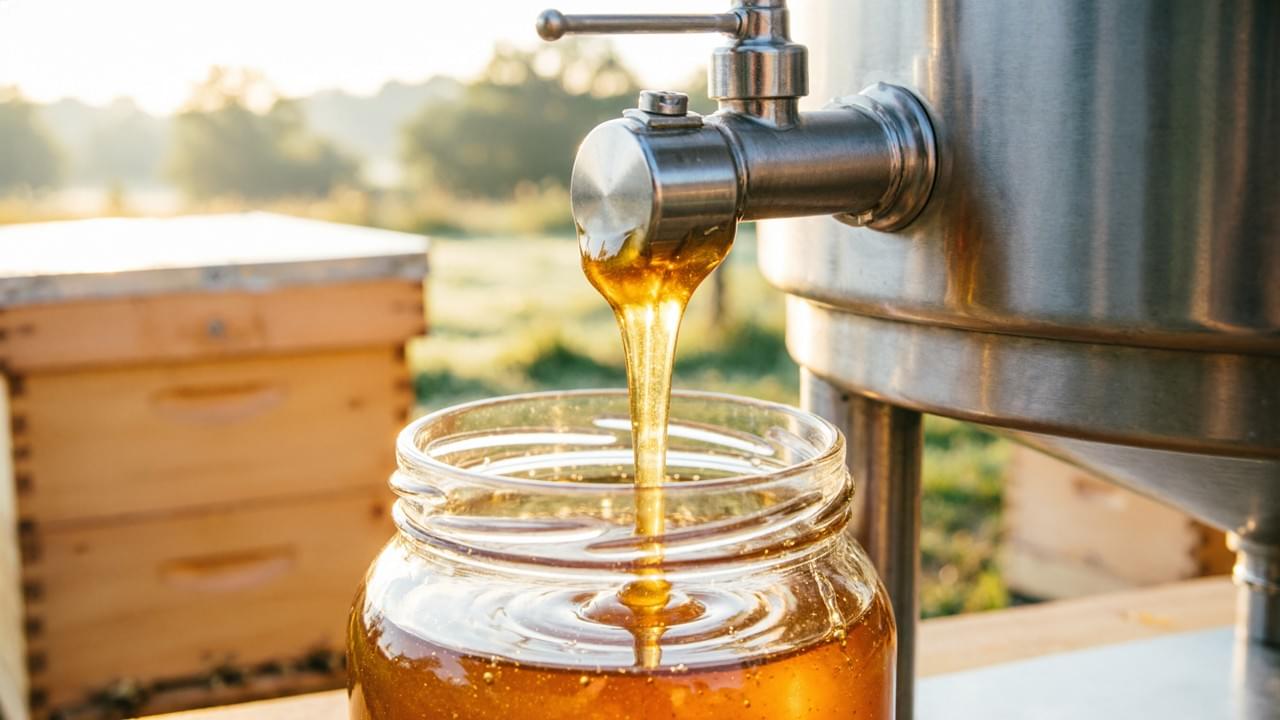
The moment every beekeeper dreams of is the golden flow of liquid honey. However, successful honey extraction is more than just a rewarding task; it is a meticulous process that requires precision, patience, and the right tools. Whether you are a commercial producer or a hobbyist, mastering the transition from hive to bottle ensures your product retains its premium quality and natural enzymes.
Beyond the harvest, sustaining your apiary’s health is equally vital. By understanding the art of splitting honey bee colonies, you can proactively manage hive populations, prevent swarms, and double your production capacity for the next season. Let’s dive into the professional workflow that turns a buzzing hive into a shelf-ready masterpiece.
Table of Contents
ToggleStep 1: Evaluating Hive Readiness for Honey Extraction 🐝
Before reaching for your beekeeper protective clothing, you must ensure the honey is “ripe.” Check that at least 80% of the frames are capped with white wax. This capping is the bees’ way of signaling that the moisture content is below 18%, preventing fermentation. Using a refractometer at this stage is a professional move to guarantee long-term shelf stability.
Step 2: Calmly Removing the Supers 💨
Efficiency starts with a calm colony. Use a high-quality smoker with natural fuel to gently direct the bees away from the honey supers. For those managing multiple hives, a fume board or a bee blower can significantly speed up this phase. Always handle the frames with care to avoid agitating the queen, especially if you plan on splitting honey bee colonies later in the day.
Step 3: Precise Uncapping Techniques 🔪
Once in your processing area, the wax seals must be removed. A heated uncapping knife or a specialized uncapping fork allows you to slice through the wax without damaging the cell structure. This step is crucial because preserved combs can be returned to the bees, saving them the immense energy required to build new wax.
Step 4: Loading the Honey Extraction Equipment ⚙️
Now comes the heart of the operation. If you are using a stainless steel honey extractor, ensure the frames are balanced. An unbalanced extractor creates vibrations that can damage the machine and the delicate wax.
- Tangential Manual: Great for beginner beekeeping equipment setups.
- Radial Electric: The gold standard for high-volume efficiency. Start at a low RPM and gradually increase the speed to pull every drop of honey from the cells using centrifugal force.
Step 5: Triple Filtration for Purity ✨
Raw honey often contains small wax particles or hive debris. To achieve that professional, crystal-clear look, pass your honey through a graduated stainless steel sieve system. This gravity-fed process maintains the honey’s nutritional integrity while removing impurities.
Step 6: Strategic Honey Extraction Cleanup & Storage 🍯
Hygiene is non-negotiable. Once the flow stops, store your honey in food-grade buckets or settling tanks. Let it sit for 24-48 hours to allow air bubbles to rise to the top. Clean your beginner beekeeping equipment immediately with warm water (not boiling, to avoid melting wax into the gears) to prevent attracting pests like wax moths.
Step 7: Sustainable Expansion via Splitting Honey Bee Colonies 📈
A professional beekeeper never just harvests; they also plant for the future. Splitting honey bee colonies in the late spring or early summer is the most effective way to combat the natural swarming instinct. By taking 2-3 frames of capped brood and a frame of honey from a strong hive, you can create a “nuc” or a new colony. This not only replaces winter losses but also allows you to test new queen genetics. For detailed hive components, check our latest bee hive and frames collection to house your new splits.
Pro Tips for Maximizing Your Apiary’s Potential 💡
- Temperature Matters: Aim to extract honey on a warm day (above 25°C). Warm honey is less viscous and flows much faster through the filters.
- Record Keeping: Note which hives produced the most during honey extraction. Use these high-performing colonies as your primary stock for future splits.
- Invest in Quality: Using a durable stainless steel honey extractor reduces mechanical failure risks during the peak of the season.
Final Thoughts 🌟
Efficient honey extraction and proactive colony management are the two pillars of a successful beekeeping business. By following these seven steps, you ensure a high-quality product for your customers and a growing, healthy population of pollinators for the environment.
Ready to scale your production? From professional-grade extractors to durable hive tools, we provide the “one-stop” support you need. Contact our technical team today for a customized equipment quote tailored to your apiary’s size!