
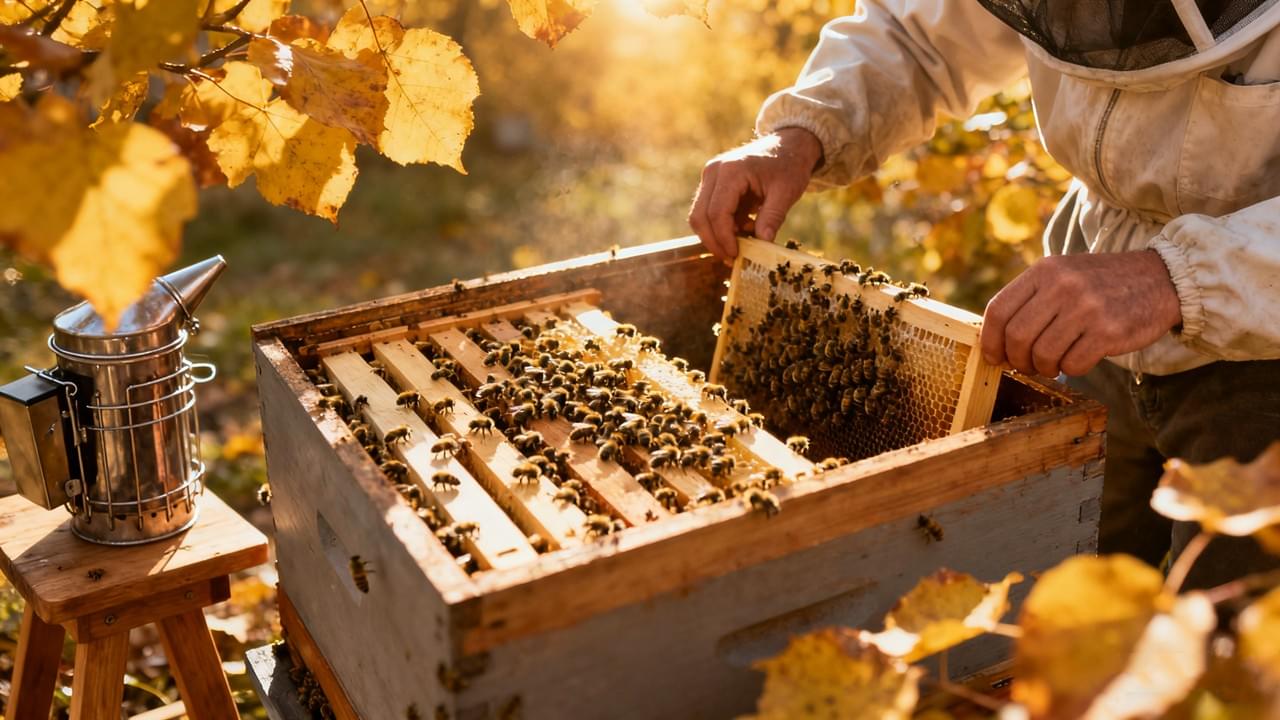
As autumn arrives and the flowers fade, every beekeeper faces a defining challenge—autumn beekeeping preparation. The crisp air may feel refreshing, but for your colonies, it signals a crucial shift from production to protection. How well your bees survive the cold months depends on the steps you take now.
From feeding strategies to fall Varroa mite control, successful preparation ensures your hives stay strong, healthy, and ready to bloom again in spring.
To explore professional tools that simplify each step, visit Delee’s Beekeeping Equipment Solutions—a one-stop resource trusted by global apiarists.
Table of Contents
Toggle1. Check Honey Stores and Feed Strategically
A thriving colony needs around 60–90 pounds (27–40 kg) of honey to survive winter. Colonies with insufficient stores should receive 2:1 sugar syrup or fondant before temperatures drop too low.
Use top feeders or frame feeders to provide food efficiently without chilling the bees. Avoid overfeeding late into the season, as unprocessed syrup can cause moisture buildup.
Delee’s honey feeders are designed to minimize drowning and encourage consistent consumption—ideal for preparing beehives for winter when bees are conserving energy.
2. Manage Varroa Mites Before Winter Sets In
Autumn is the final opportunity for effective Varroa mite control before brood rearing slows. Mites reproduce rapidly during late summer, weakening emerging “winter bees.”
Perform mite counts using alcohol wash or sugar shake tests. If infestation exceeds 2%, apply organic treatments such as oxalic acid vaporization or formic acid pads.
For reliable control, Delee offers Varroa management kits and professional protective gear, helping beekeepers treat hives safely and precisely.
For more data-backed guidance, refer to the Bee Informed Partnership’s latest mite report on seasonal mite management across regions.
3. Evaluate Brood Pattern and Queen Performance
Inspect brood frames for a solid, consistent brood pattern and visible eggs or larvae. A healthy queen produces compact, uniform brood without empty gaps. Spotty patterns may indicate disease or queen decline.
If the queen is failing, requeen with a younger, more productive one before winter. Weak or queenless hives can be combined with stronger colonies using the newspaper method for improved survival.
You can find professional-grade queen cages and requeening tools at Delee’s Queen Management Collection.
For diagnostic support on brood health, the USDA Honey Bee Health Overview offers excellent scientific references.
4. Consolidate Hive Space and Improve Insulation
As the colony population declines, excessive space makes heat retention harder. Remove empty supers and condense brood frames into a single, well-packed area.
Install entrance reducers to shield against robbing bees and cold drafts while maintaining proper airflow. In colder regions, use hive insulation wraps or foam boards to preserve warmth.
Delee’s insulated hive equipment helps regulate hive temperature and prevent condensation—two critical elements for successful winter survival.
5. Prevent Moisture Build-Up with Proper Ventilation
Moisture—not cold—is the silent killer of bees in winter. As bees cluster to generate warmth, condensation can drip back onto them, causing fatal chilling.
Use a vented inner cover or small upper entrance to allow humid air to escape. Absorbent material above the cluster, such as burlap or wood shavings, helps control excess moisture.
Balancing insulation and ventilation is key. A well-ventilated yet insulated hive keeps your colony dry, warm, and healthy through long winter months.
6. Inspect for Diseases and Hive Pests
Before sealing your hives, inspect for small hive beetles, wax moths, or foulbrood. Remove debris, replace damaged combs, and store clean equipment in a pest-free location.
Delee’s durable stainless-steel tools and long-lasting wooden hives simplify cleaning and maintenance, preventing disease carryover.
Stay updated with science-based hive management methods through the Bee Informed Partnership—a trusted authority on colony health data.
7. Prepare Equipment and Plan for the Next Season
Autumn is the perfect time to clean, repair, and organize your beekeeping equipment. Wash extractors, feeders, and hive tools; replace worn frames; and inspect joints for moisture damage.
Plan early for spring by ordering replacement bees, queens, or new hive bodies from Delee’s Beekeeping Supplies.
Keep detailed records of colony size, feeding habits, and mite counts. Consistent data tracking allows smarter management decisions and stronger colonies next year.
Strong colonies aren’t built in winter—they’re built in autumn. Proper autumn beekeeping preparation means your bees enter the cold months healthy, well-fed, and resilient.
By controlling mites, ensuring adequate stores, and optimizing insulation, you set the stage for a successful spring bloom.
Discover reliable tools and expert advice at Delee Honey’s official beekeeping equipment hub—your trusted partner for global hive management excellence.