
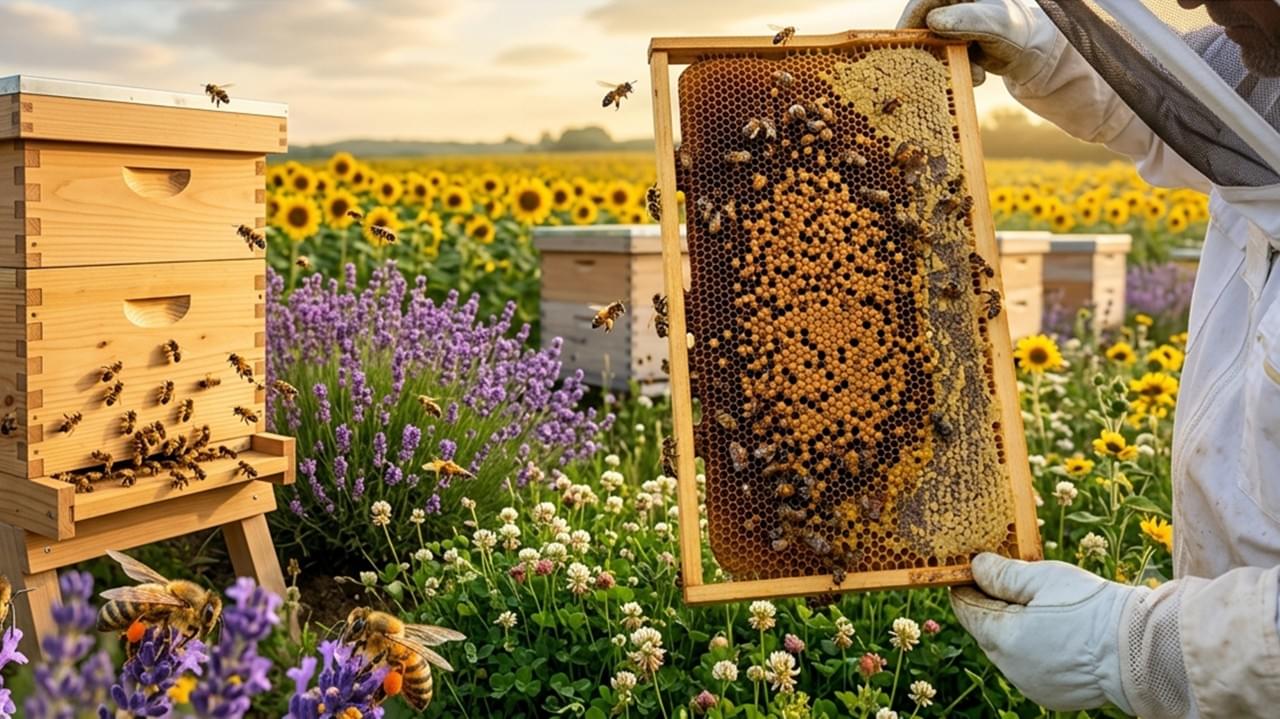
🐝 Bee Nutrition is the foundation of every successful beekeeping operation. Healthy honey bees require a balanced diet to support brood development, honey production, disease resistance, and overall colony performance. Just as proper nutrition strengthens human health, adequate nutrition helps bees maintain strong immune systems and withstand environmental stress.
Unfortunately, many colony losses can be linked to nutritional deficiencies caused by poor forage availability, drought conditions, monoculture farming, or long winters. Understanding bee nutritional requirements and providing supplemental feeding when necessary can significantly improve colony survival and productivity.
Table of Contents
Toggle🌼 Understanding the Two Essential Sources of Bee Nutrition
Honey bees obtain nearly all of their nutritional needs from two natural resources: nectar and pollen.
🌸 Nectar Provides Energy for Daily Activities
Nectar serves as the primary carbohydrate source for honey bees. Worker bees collect nectar from flowering plants and convert it into honey, which becomes the colony’s long-term energy reserve.
Adequate nectar intake supports:
- Flight and foraging activities
- Hive temperature regulation
- Wax production
- Colony maintenance
- Winter survival
When nectar sources become scarce, colonies may rapidly consume stored honey, leading to nutritional stress.
🌻 Pollen Supplies Protein and Vital Nutrients
Pollen is equally important because it contains proteins, amino acids, lipids, vitamins, and minerals that bees cannot obtain from nectar alone.
A healthy pollen supply supports:
✅ Brood development
✅ Queen egg production
✅ Worker bee longevity
✅ Immune system function
✅ Royal jelly production
Without sufficient pollen, colony growth often slows dramatically.
🐝 How Poor Bee Nutrition Weakens Colonies
Nutritional stress affects every aspect of colony performance. Research has shown that poorly nourished bees are more susceptible to pests, pathogens, and environmental challenges.
Common signs of inadequate nutrition include:
- Reduced brood production
- Smaller worker populations
- Weak queen performance
- Increased disease susceptibility
- Reduced honey yields
- Poor overwintering success
Maintaining proper bee nutrition for healthy colonies is one of the most effective ways to support strong, resilient hives throughout the year.
🍯 When Supplemental Bee Nutrition Becomes Necessary
Natural forage conditions are not always reliable. Certain periods of the year require beekeepers to provide additional nutritional support.
🌾 During Nectar Dearth Periods
Many regions experience seasonal gaps when flowering plants produce little nectar. During these periods, colonies may consume food reserves faster than they can replace them.
❄️ During Winter
Winter is often the most challenging season for honey bee survival. Colonies remain clustered inside the hive and depend entirely on stored food reserves.
Monitoring hive weight before winter can help identify colonies that need supplemental feeding.
☀️ During Drought Conditions
Extended dry weather often reduces both nectar and pollen availability. Supplemental feeding can help maintain brood production and prevent colony decline.
🌱 During Spring Build-Up
Strong colonies require substantial resources during spring expansion. Supplemental feeding can stimulate brood rearing and prepare colonies for major honey flows.
🍬 Bee Nutrition Through Sugar Syrup Feeding
One of the most widely used supplemental feeding methods is sugar syrup feeding for bees.
Different sugar-to-water ratios serve different management goals.
Spring Feeding: 1:1 Ratio
A mixture of one part sugar and one part water stimulates brood production and encourages colony growth.
Benefits include:
- Increased egg laying
- Faster colony buildup
- Enhanced brood development
Autumn Feeding: 2:1 Ratio
A mixture of two parts sugar and one part water helps colonies build food reserves before winter.
Benefits include:
- Increased honey stores
- Better winter preparation
- Reduced starvation risk
Using quality bee feeders can improve feeding efficiency and reduce robbing behavior. For example, beekeepers can choose from top feeders, frame feeders, and entrance feeders available at BeekeepingEQPT’s feeder collection page.
🌾 Why Pollen Substitute for Bees Is Sometimes Essential
Natural pollen shortages can occur even when nectar is available. In these situations, a high-quality pollen substitute for bees can provide critical nutrients needed for brood rearing.
Most commercial pollen substitutes contain:
- Plant-based proteins
- Essential amino acids
- Vitamins and minerals
- Nutritional supplements
A good pollen substitute should be attractive to bees, easy to digest, and capable of supporting healthy brood development.
Many professional beekeepers rely on pollen patties during early spring and late winter when natural pollen sources are limited.
🌺 Creating Better Bee Nutrition with Diverse Forage
One of the best long-term solutions for improving Bee Nutrition is increasing forage diversity around apiaries.
Planting bee-friendly flowers can provide continuous nectar and pollen throughout the season.
Popular choices include:
🌻 Sunflowers
🌸 Lavender
🍀 Clover
🌼 Wildflowers
🌾 Buckwheat
🌳 Fruit trees
Diverse forage sources provide a broader range of nutrients, helping colonies maintain stronger immune systems and improved productivity.
For additional forage planning resources, beekeepers can consult the official guidance provided by the USDA Agricultural Research Service and the Apimondia Beekeeping Federation.
🔧 Choosing the Right Feeding Equipment
Proper equipment plays an important role in delivering supplemental nutrition effectively.
Popular options include:
🔹 Top Feeders
🔹 Frame Feeders
🔹 Entrance Feeders
🔹 Bucket Feeders
Selecting the right feeder depends on colony strength, climate conditions, and feeding objectives.
You may also find our guides on hive management, winter beekeeping preparation, and colony health monitoring helpful when developing a complete nutrition strategy.
🐝 Strong colonies begin with strong nutrition. By understanding natural forage requirements, practicing effective sugar syrup feeding for bees, utilizing a quality pollen substitute for bees when necessary, and improving forage diversity, beekeepers can significantly enhance colony health and productivity.
Investing in proper Bee Nutrition not only improves honey production but also strengthens colony immunity, increases overwintering success, and supports long-term beekeeping success.
👉 Support Your Colonies with Professional Feeding Solutions
At Delee Beekeeping, we provide reliable bee feeders, feeding accessories, and nutritional support products designed to help beekeepers maintain healthy, productive colonies throughout every season. Explore our feeding equipment solutions today and give your bees the nutritional advantage they deserve.