
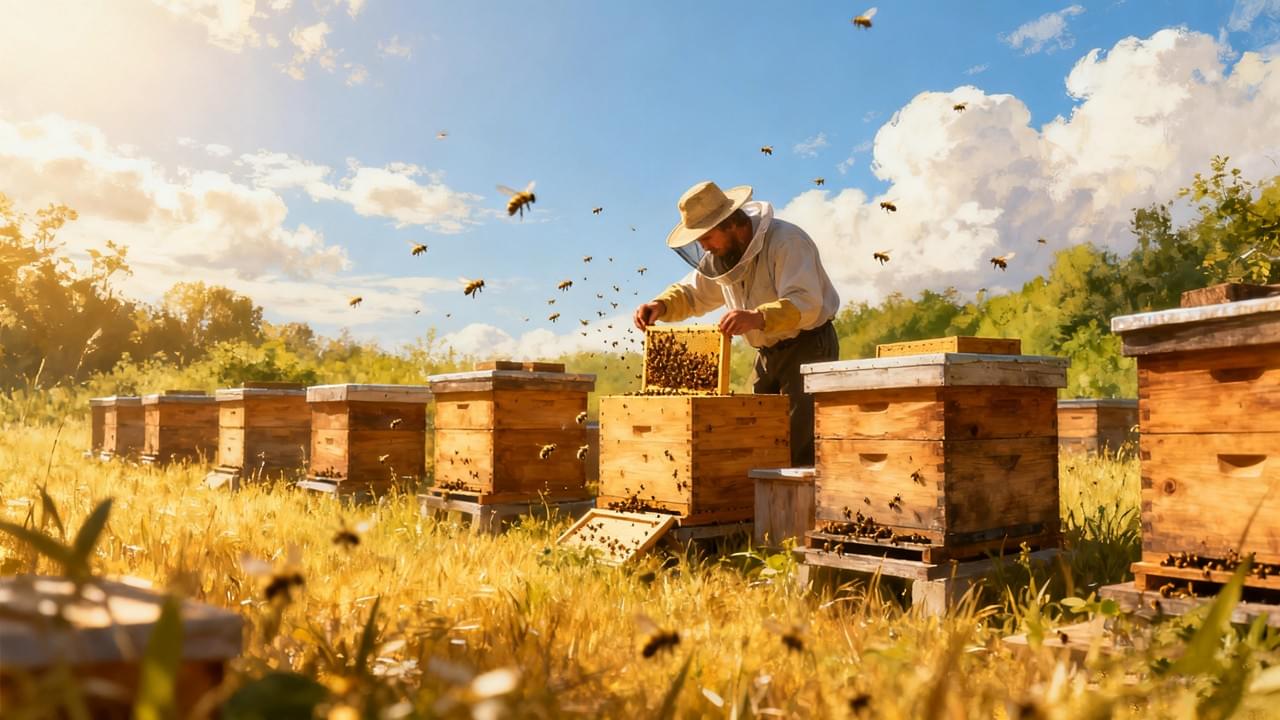
Beekeeping is more than harvesting honey—it’s about ensuring long-term hive health. One of the most effective ways to expand your apiary and keep bees productive is colony splitting. This practice not only increases hive numbers but also prevents natural swarming, reduces disease risks, and promotes strong colony growth.
Table of Contents
ToggleWhy Colony Splitting Matters
Colony splitting is the intentional division of a strong hive into two or more smaller colonies. For beekeepers, the benefits are substantial:
- Swarm Prevention: By splitting colonies before they become overcrowded, you avoid the loss of half your bees and the queen.
- Apiary Expansion: It’s the most cost-effective way to increase hive numbers without buying new packages.
- Health Management: Smaller, managed hives reduce disease and pest transmission.
- Productivity Boost: Balanced colonies are better at brood rearing and honey production.
With proper planning, colony splitting turns potential challenges into growth opportunities.
Colony Splitting Methods Every Beekeeper Should Know
There are several colony splitting methods, each with unique benefits. Choosing the right approach depends on hive strength, resources, and beekeeper experience.
1. Simple Split
The hive is divided evenly into two colonies. One retains the old queen, while the other raises or receives a new queen. This straightforward method works best in spring when nectar is abundant.
2. Nucleus Colony (Nuc) Split
Instead of equal halves, create smaller colonies called nucs, usually 2–5 frames of brood, bees, and honey. Nucs are ideal for queen rearing, strengthening weak hives, or selling to other beekeepers.
3. Double-Screen or Snelgrove Method
This advanced approach uses a screen board to separate two colonies within the same hive. The queenless section raises a new queen, while benefiting from the warmth and resources of the original colony.
4. Walk-Away Split
As the name suggests, simply divide the colony and let the queenless half rear a new queen. Although simple, success depends on weather, drone availability, and colony strength, making it slightly risky.
Best Time to Split a Hive
Timing is crucial. The ideal period is spring to early summer, when colonies are naturally growing and queens can mate successfully. Splitting too late may result in weak hives that struggle to survive winter.
Beekeepers asking how to split a beehive should always ensure strong brood patterns, plentiful bees, and available resources before dividing.
Post-Split Hive Management
After splitting, both colonies need support to thrive:
- Introduce a New Queen: Purchasing a mated queen is often safer than relying on natural queen rearing.
- Provide Supplemental Feeding: Use sugar syrup or pollen substitutes to strengthen young colonies.
- Monitor for Pests: Watch for varroa mites or signs of disease, as weaker colonies are more vulnerable.
- Check Hive Space: Add frames or boxes as needed to prevent overcrowding.
Practical equipment such as nuc boxes, feeders, and queen cages makes post-split management far easier.
Essential Equipment for Successful Splits
To expand effectively, beekeepers should prepare the right gear before splitting:
- Hive boxes and nuc kits for new colonies
- Queen cages and excluders for controlled introductions
- Feeders to provide consistent nutrition
- Protective clothing and hive tools to ensure safe handling
Suppliers like Delee Beekeeping Equipment provide complete solutions for colony splitting, from nuc kits to queen management tools, making the process efficient and reliable.
Expand Your Apiary with Confidence
Colony splitting is not just a method—it’s a strategy for sustainable growth and hive health. By applying the right colony splitting methods, you can expand your apiary, improve productivity, and reduce risks from swarming or disease.
Whether you’re a hobbyist beekeeper or managing dozens of hives, learning how to split a beehive effectively ensures your colonies remain strong and thriving. With proper timing, management, and equipment, colony splitting becomes one of the most rewarding skills in modern beekeeping.
Ready to increase hive numbers? Explore high-quality hive boxes, nuc kits, and queen tools to make your next colony split a success.