
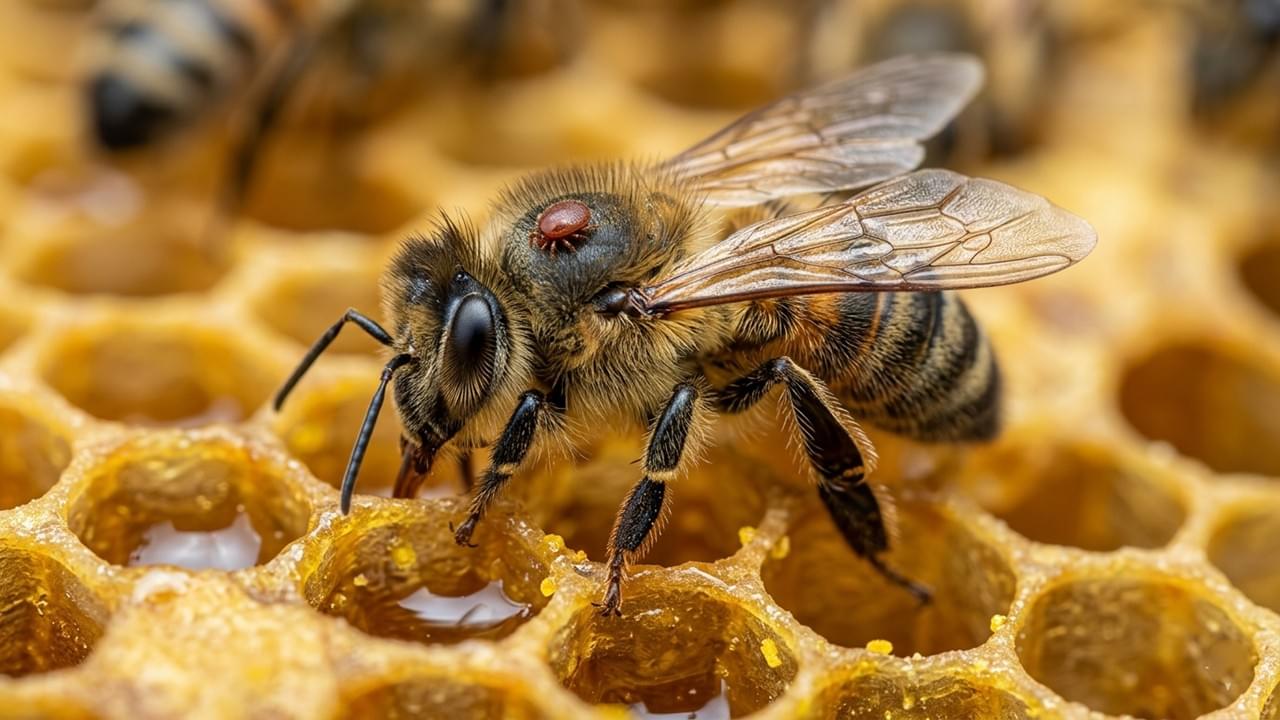
ミツバチを災難から救うための、ミツバチヘギイタダニ対策の7つの必須戦略

プロの養蜂家が、効果的なミツバチヘギイタダニ駆除を実施し、ミツバチのコロニーの長期的な健康を確保するために、巣枠を検査している。.

Beekeeping is often a labor of love, but let’s be honest—it can be heartbreaking when you open a hive only to find a dwindling population. The culprit? More often than not, it is the Varroa destructor. Implementing effective Varroa Mite Control is no longer an optional task for the hobbyist; it is a fundamental survival skill. In recent years, global colony loss rates have skyrocketed, largely driven by these tiny parasites that suck the life out of our hives and spread lethal viruses like Deformed Wing Virus (DWV). 🐝

If you want to ensure long-term honey bee colony health, you need a plan that goes beyond crossing your fingers. This guide breaks down professional-grade strategies to keep your bees buzzing and productive.

1. Why Frequent Monitoring is the Backbone of Varroa Mite Control

You can’t fight an enemy you can’t see. Many new beekeepers wait until they see mites on the backs of their bees to act, but by then, it’s usually too late. Most mites hide in the brood cells or underneath the bees’ abdominal segments. 🔍

To stay ahead, you must perform a monthly “Alcohol Wash.” While it sounds harsh to sacrifice 300 bees, the data it provides is invaluable for the rest of the colony. According to the ハニービー・ヘルス・コアリション, a 2-3% infestation rate is the critical threshold. If you find more than 6-9 mites in your wash, it is time to intervene immediately.

2. Adopting Integrated Pest Management for bees (IPM)

Effective beekeeping isn’t about blasting the hive with chemicals at the first sign of trouble. Instead, we use Integrated Pest Management for bees. IPM is a tiered approach that starts with low-impact cultural methods and scales up to “hard” treatments only when necessary. 🪜

By using a combination of screened bottom boards, mite-resistant queen genetics, and drone brood removal, you create an environment where mites struggle to thrive. This holistic mindset reduces the chemical load on your honey and keeps your bees’ immune systems strong.

3. Cultural Tactics for Natural Varroa Mite Control

Before reaching for the applicator, look at your hive’s biology. Varroa mites prefer drone brood because the longer capping period allows them to reproduce more successfully. By using specialized drone foundation frames, you can “trap” the mites. Once the drone cells are capped, simply remove the frame, freeze it, and scrape it clean. ❄️

Additionally, investing in high-quality beehives and accessories—specifically screened bottom boards—allows mites that fall off during grooming to drop out of the hive entirely, preventing them from re-attaching to a passing worker bee.

4. The Power of Oxalic Acid for Varroa Mites

When the colony is in a broodless state—typically in late autumn or early spring—oxalic acid for Varroa mites is the gold standard for treatment. It is an organic acid that occurs naturally in many plants, and when applied correctly via vaporization or the dribble method, it boasts a kill rate of over 95% for “phoretic” mites (those outside the cells). ⚗️

However, remember that oxalic acid does not penetrate capped brood. Timing is everything. If you treat while the queen is laying heavily, you will only kill a fraction of the population. For those looking for professional application tools, デリー養蜂 provides durable equipment designed to make these treatments safer for both the beekeeper and the bees.

5. Essential Oils and Formic Acid Options for Varroa Mite Control

During the honey flow, your options are more limited because you don’t want to contaminate your harvest. Formic acid is a fantastic “natural” tool because it is the only treatment capable of penetrating the wax cappings to kill mites where they breed. 🌿

Thymol-based treatments (derived from thyme) are another excellent organic choice. These work by creating a scent that disrupts the mites’ ability to find hosts. However, be cautious of the temperature; these essential oils can become too volatile in extreme heat, potentially stressing the queen.

6. Supporting Immunity through Better Nutrition

A well-fed bee is a resilient bee. Mites feed on the “fat body” tissue of honey bees, which is essentially the bee’s liver and immune system combined. If your bees are already struggling with poor forage or a nectar dearth, a Varroa infestation will collapse the hive much faster. 🍯

Ensure your colonies have access to high-quality pollen substitutes during the lean months. Keeping your equipment clean and using modern honey processing equipment during harvest prevents robbing and cross-contamination between hives, which are major pathways for mite-spread viruses.

7. Seasonal Timing: The Secret to Varroa Mite Control Success

The biggest mistake beekeepers make is treating too late in the fall. You aren’t just treating to save the bees you see now; you are treating to ensure the “Winter Bees” are born healthy. If your August mite count is high, your winter bees will be born weakened, and the colony will likely perish before February. 📅

Set a calendar reminder for the 15th of every month to check your mite levels. Consistent data leads to consistent success.

最後に

Managing Varroa isn’t a one-and-done chore; it’s a rhythmic part of modern beekeeping. By combining Integrated Pest Management for bees with reliable monitoring and high-quality equipment, you can turn a struggling apiary into a thriving honey-producing powerhouse. 🌟

デリー養蜂, we are committed to the “one-stop service” philosophy. Whether you need the latest mite-testing kits or robust hives to house your colonies, we provide the technical support and small-batch flexibility to help you grow. Don’t let your hard work go to waste—protect your honey bee colony health today.

フェイスブック
ワッツアップ
ツイッター
リンクトイン
ピンタレスト
お見逃しなく!
お問い合わせ
こちらのフォームにご記入いただければ、できるだけ早くご返信させていただきます。