
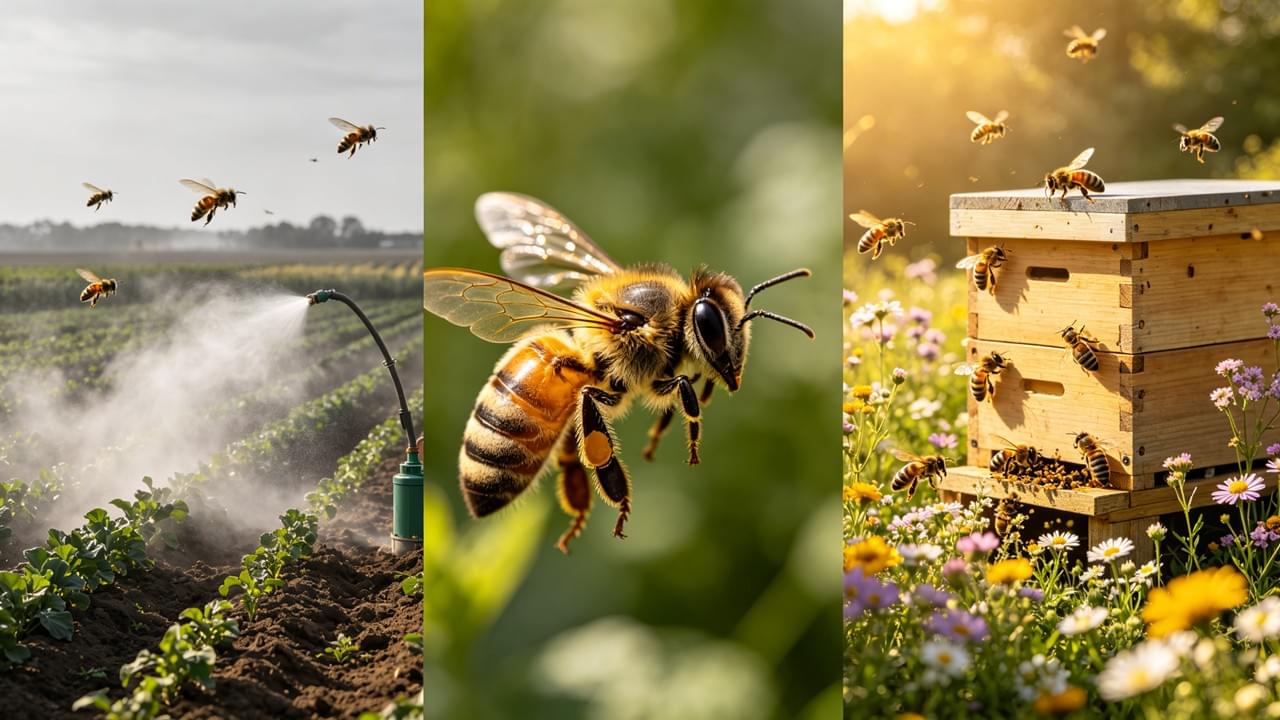
Pesticides and bees have become an increasingly urgent topic as global pollinator populations continue to decline. For modern beekeepers, understanding the relationship between pesticides and bees is not just helpful—it’s essential for survival and sustainability.
From small backyard apiaries to commercial operations, exposure to agricultural chemicals can quietly weaken colonies long before visible damage appears. This guide walks you through real risks, early warning signs, and practical strategies to protect your bees while maintaining productive, resilient hives.
Table of Contents
ToggleWhy Pesticides and Bees Are a Dangerous Combination ⚠️
The connection between pesticides and bees goes far beyond immediate toxicity. While some chemicals can kill bees on contact, others create long-term harm that is harder to detect.
Direct Lethal Effects
Certain pesticides cause immediate death when bees come into contact with treated plants, water, or drifting spray. Large numbers of dead bees near hive entrances often signal acute exposure.
Sublethal Effects That Go Unnoticed
More subtle—but equally damaging—are behavioral changes. Bees exposed to low pesticide levels may:
- Lose navigation ability
- Struggle to forage efficiently
- Experience reduced learning capacity
Over time, these effects weaken the entire colony.
Immune System Suppression
Research shows that pesticide exposure can make bees more vulnerable to diseases and parasites. This compounds threats like Varroa mites, accelerating colony collapse.
For deeper scientific insights into the impact of pesticides on bees, you can explore resources from organizations like the
👉 https://www.xerces.org/pollinator-conservation
Common Pesticides That Threaten Bee Health 🧪
Neonicotinoids: A Major Risk Factor
Among all chemical classes, neonicotinoids are widely discussed due to their systemic nature. These pesticides:
- Spread through the entire plant (including nectar and pollen)
- Persist in soil and water
- Affect bees even at low concentrations
Other Harmful Chemical Types
- Fungicides (can interact with other chemicals)
- Herbicides (reduce forage diversity)
- Insect growth regulators
Understanding pesticide types helps beekeepers make informed decisions and communicate effectively with nearby farmers.
How to Identify Pesticide Poisoning in Honey Bees 🔍
Recognizing early signs of pesticide poisoning in honey bees can make the difference between saving and losing a colony.
Visible Symptoms
- Large numbers of dead or twitching bees near the hive
- Bees unable to fly or crawling disoriented
- Sudden drop in foraging activity
Colony-Level Indicators
- Reduced brood development
- Queen failure or irregular egg-laying
- Declining population without obvious disease
If you suspect poisoning, documenting the event is critical for further action.
7 Practical Strategies to Reduce Pesticide Risks 🌱
1. Communicate with Local Farmers 🤝
Building relationships with nearby growers is one of the most effective defenses. Ask about:
- Spraying schedules
- Types of chemicals used
- Application timing
This allows you to take preventive action when needed.
2. Avoid Exposure During Blooming Periods 🌼
Never apply pesticides when plants are flowering or when bees are actively foraging. Even “bee-safe” products can become harmful under the wrong conditions.
3. Always Follow Label Instructions 📄
Pesticide labels provide legally required safety guidance. Pay attention to:
- Application timing
- Bee hazard warnings
- Buffer zone requirements
Ignoring labels increases risk significantly.
4. Provide Clean Water Sources 💧
Bees often collect water from contaminated puddles. Supplying a clean, reliable water source reduces exposure and supports colony health.
A well-designed feeder system, like those available at
👉 https://www.beekeepingeqpt.com/product-category/bee-feeders/
can also support hydration and nutrition during high-risk periods.
5. Strengthen Colony Nutrition 🍯
Healthy bees are more resilient. Supplement feeding during nectar gaps helps maintain:
- Strong immune systems
- Stable brood development
- Better detoxification capacity
Explore feeding solutions here:
👉 https://www.beekeepingeqpt.com
6. Adopt Sustainable Beekeeping Practices 🌍
Moving toward sustainable beekeeping practices reduces reliance on chemicals and improves long-term outcomes. This includes:
- Natural pest management
- Diverse forage planting
- Minimizing synthetic inputs
Sustainable methods not only protect bees but also enhance honey quality and ecosystem balance.
7. Choose Protective Equipment and Hive Solutions 🛠️
Using high-quality equipment can reduce stress and improve colony resilience. Consider:
- Durable hive systems
- Protective gear for safe inspections
- Efficient feeding tools
Browse professional-grade hive solutions here:
👉 https://www.beekeepingeqpt.com/product-category/beehive/
What to Do If Pesticide Exposure Occurs 🚨
If you suspect pesticide poisoning:
- Document everything (photos, timing, symptoms)
- Collect samples of affected bees
- Report the incident to local agricultural or environmental authorities
- Notify nearby farmers to prevent further exposure
Prompt reporting helps improve regulation and protect other beekeepers in your area.
Why Chemical-Free Beekeeping Is the Future 🌿
The shift toward chemical-free or low-chemical beekeeping is gaining momentum for a reason. It aligns with:
- Consumer demand for clean honey
- Environmental responsibility
- Long-term colony sustainability
While it may require more management skill, the benefits are clear: healthier bees, stronger colonies, and more stable production.
Recommended Solutions from Delee 🐝
To support safer, more sustainable beekeeping, Delee offers:
- Efficient bee feeders for nutritional support
- Protective equipment for safe hive management
- Durable beehives and accessories designed for long-term use
These tools help reduce stress on colonies while improving overall productivity.
Protecting Bees Starts with Awareness ❤️
Understanding the relationship between pesticides and bees is no longer optional—it’s a responsibility every beekeeper shares. Small, consistent actions—like improving communication, adjusting management practices, and investing in the right equipment—can make a meaningful difference.
Healthy bees mean healthy ecosystems, better crop yields, and a more sustainable future for everyone.