
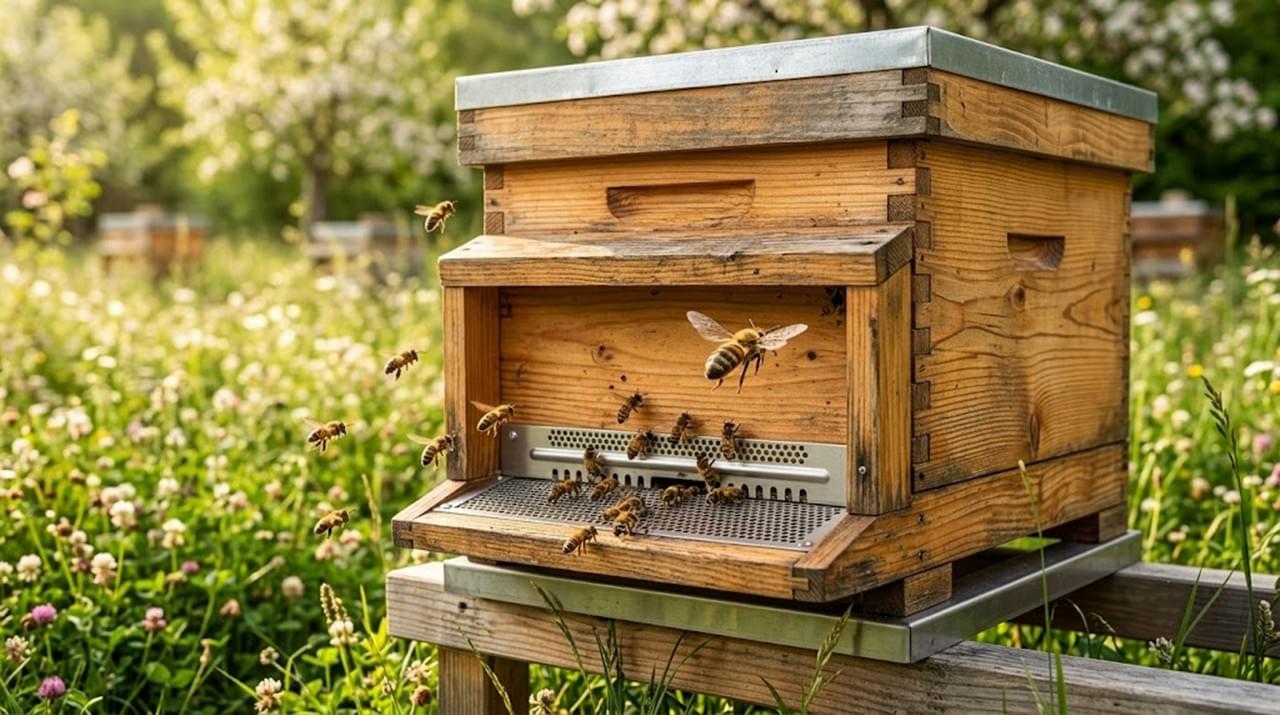
The Small Hive Beetle (Aethina tumida) is a true nightmare for beekeepers. If left unchecked, these destructive pests can multiply rapidly, slime your precious combs, and force your entire honeybee colony to abscond. Executing an aggressive Small Hive Beetle control strategy is absolutely paramount to maintaining a thriving apiary and ensuring a heavy honey harvest this season. In this expert guide, we will share five practical, field-tested beehive pest management tips to help you reclaim your hives from these invaders.
İçindekiler
Geçiş🛑 The True Danger of a Beetle Infestation
To beat the beetle, you must first understand how they destroy a colony. It is not actually the adult beetles that do the most damage, but rather their voracious larvae. Adult beetles sneak into the hive and lay clusters of eggs in tiny, hidden crevices. When these larvae hatch, they tunnel directly through your wax combs, feeding on bee brood, pollen, and uncapped honey.
As they feed, the larvae excrete a specific strain of yeast that causes your honey to ferment, bubble, and rot. This transforms your beautiful honey harvest into a foul, sticky, slimy mess that smells like rotting oranges. Once a frame becomes completely “slimed,” worker bees will abandon it, often leading to a total colony collapse. Knowing how to get rid of hive beetles before they reach this stage is critical. For a deeper academic look into their destructive life cycle, you can review the University of Florida’s Small Hive Beetle Research to better understand their biological behavior.
1. Maintain a Proper Bee-to-Comb Ratio for Natural Small Hive Beetle Control
Your absolute best natural defense against any hive pest is a booming, aggressive honeybee population. Robust, crowded colonies naturally corral adult beetles, chasing them away from the brood nest and trapping them in corners where they cannot lay eggs.
Never give a weak or developing colony more hive bodies or honey supers than they can actively guard. If a hive has too much empty space, the bees cannot patrol every frame, creating a perfect sanctuary for beetles to multiply. Keep your hives compact, tight, and densely populated to let your workers do what they do best.
2. Upgrade Your Base with a Screened Bottom Board for Beetles
Standard solid wooden bottom boards accumulate dark, moist hive debris, which creates the perfect incubator for beetle eggs and pests. Upgrading your apiary setup by utilizing a specialized screened bottom board for beetles is one of the easiest, most passive ways to slash pest numbers instantly.
When beetles run from aggressive bees, or when debris falls from the frames, it drops right through the heavy-duty mesh screen. Pests fall completely out of reach of the honeybee colony, breaking their reproductive cycle. You can browse our durable, professional-grade Delee Screened Bottom Boards to easily upgrade your setup today.
3. Deploy Top-Bar Oil Traps for Active Small Hive Beetle Control
Physical trapping is highly effective and completely chemical-free. One of the most reliable beehive pest management tips is to install reusable plastic oil traps, often called Beetle Blasters, right between your top bars.
Fill these slim traps halfway with a safe, food-grade mineral oil or vegetable oil. As your worker bees aggressively chase adult beetles across the top of the frames, the beetles will naturally try to hide inside the small slots of the trap. They fall into the oil and drown, dramatically reducing the breeding adult population without introducing any harmful chemical residues to your pure honey.
4. Utilize Unscented Fiber Sheets for Mechanical Small Hive Beetle Control
Another highly effective, low-cost physical barrier involves using everyday unscented fiber sheets or heavy-duty dryer sheets. Place a couple of these sheets on the top corners of your upper hive body or under the inner cover.
Because Small Hive Beetles have tiny, fuzzy claws on their legs, they easily get hopelessly entangled in the microscopic fibers as they wander around the hive. The honeybees will occasionally chew on the sheets, but they generally leave them alone while the beetles remain trapped. Monitor these sheets during your regular inspections and replace them once they become full or propolized.
5. Apply Safe In-Hive Chemical Small Hive Beetle Control When Necessary
If you are facing a massive, out-of-control population spike, physical traps alone might not cut it. Learning how to get rid of hive beetles during a severe crisis sometimes requires targeted, bee-safe chemical interventions.
Always choose strictly approved, slow-release beetle baits or specialized ground drenches that target beetle larvae when they leave the hive to pupate in the soil. Never apply unapproved agricultural pesticides inside your hive, as these can easily contaminate your honeycomb or harm your queen. Always follow product labels precisely to keep your honeybees safe.
🛒 Protect Your Honeybees Today
Do not wait until a severe infestation ruins your hard work and spoils your honey crop. Taking proactive steps today will save your bees tomorrow. At Deli Beekeeping Equipment, we manufacture a premium selection of hive components designed to give you the upper hand against pests. Explore our complete collection of Beekeeping Equipment and Tools to equip your apiary with the very best defenses.