
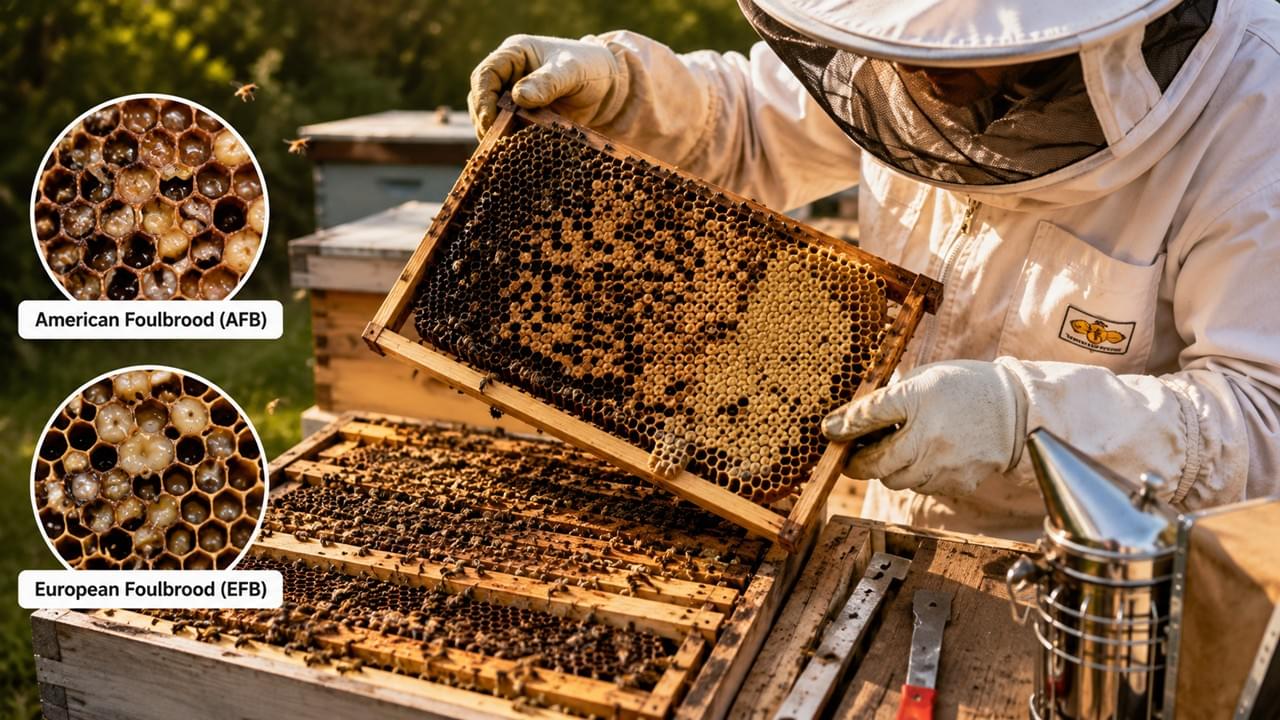
تُعدّ خلايا النحل السليمة أساس نجاح تربية النحل، لكن أمراض الحضنة البكتيرية قد تُدمّر إنتاجية الخلية بسرعة. ومن بين أخطر هذه التهديدات: مرض الحضنة الأمريكي ومرض الحضنة الأوروبي, مرضان معديان يصيبان يرقات النحل النامية وينتشران بسرعة من خلال المعدات الملوثة وضعف إدارة الخلية.
إن فهم كيفية التعرف على هذه الأمراض مبكراً يساعد النحالين على تقليل خسائر خلايا النحل والحفاظ على خلايا أقوى. في هذا الدليل، سنستعرض الأعراض وطرق الوقاية وخيارات العلاج والمسؤوليات القانونية المتعلقة بهذه الأمراض الخطيرة التي تصيب الحضنة. 🐝
جدول المحتويات
تبديل🦠 ما هو مرض الحضنة الأمريكي ومرض الحضنة الأوروبي؟
مرض الحضنة الأمريكي ومرض الحضنة الأوروبي هي عدوى بكتيرية تصيب حضنة نحل العسل، لكنها تختلف في شدتها وطرق علاجها.
🔬 مرض الحضنة الأمريكي (AFB)
مرض تعفن الحضنة الأمريكي ناتج عن Paenibacillus larvae. يصيب هذا المرض بشكل رئيسي الحضنة المغطاة ويخلق أبواغًا شديدة التحمل يمكنها البقاء على قيد الحياة لعقود في معدات الخلية.
تشمل الأعراض الشائعة ما يلي:
- أغطية الحضنة الغائرة أو المثقوبة
- بقايا يرقات بنية داكنة
- رائحة كريهة قوية
- أنماط حضانة غير متساوية
إحدى طرق التشخيص الكلاسيكية هي "اختبار اللزوجة"، حيث تتمدد اليرقات المصابة إلى خيط لزج عند سحبها بعصا صغيرة.
لسوء الحظ، تتطلب الإصابات الشديدة بمرض الحضنة الأمريكي عادةً تدمير المستعمرات المصابة والمعدات الملوثة لمنع انتشار المرض.
🧪 مرض الحضنة الأوروبي (EFB)
مرض تعفن الحضنة الأوروبي ناتج عن ميليسوكوكس بلوتونيوس. على عكس مرض الحضنة الأمريكي، فإن مرض الحضنة الأوروبي عادة ما يصيب اليرقات غير المغطاة قبل أن تُغلق الخلايا.
تشمل علامات الإصابة بـ EFB ما يلي:
- يرقات ملتوية أو ذائبة
- لون الحضنة أصفر باهت
- رائحة كريهة داخل الخلية
- نمو غير منتظم للحضنة
والخبر السار هو أن مرض EFB غالباً ما يكون قابلاً للعلاج عند اكتشافه مبكراً.
🔍 كيف تنتشر الأمراض في المنحل
يمكن أن ينتشر كلا المرضين بسرعة بين المستعمرات. وتشمل مصادر العدوى الشائعة ما يلي:
- أدوات خلية مشتركة
- إطارات ملوثة أو عسل
- سلوك السرقة بين المستعمرات
- شراء معدات مستعملة غير آمنة
- النحل المتجول بين خلايا النحل القريبة
نظراً لأن جراثيم مرض الحضنة الأمريكي تعيش لسنوات عديدة، فإن العديد من مربي النحل المحترفين يتجنبون استخدام المعدات القديمة أو غير المعقمة بشكل جيد.
يمكن أن يساعد استخدام أنظمة خلايا النحل سهلة التنظيف من شركة Delee Beekeeping Equipment Supplier في تقليل مخاطر التلوث وتحسين نظافة خلايا النحل.
🛡️ نصائح للوقاية من أمراض حضنة النحل
الإدارة الوقائية هي أفضل حماية ضد مرض الحضنة الأمريكي ومرض الحضنة الأوروبي.
🧼 الحفاظ على نظافة المعدات
قم بتعقيم أدوات الخلية والقفازات والمغذيات ومعدات الاستخراج بانتظام. النظافة الجيدة تقلل من انتشار البكتيريا بشكل كبير.
🍯 حافظ على قوة المستعمرات
تتمتع خلايا النحل السليمة بمقاومة طبيعية أكبر لأمراض الحضنة. ويمكن أن يؤدي التغذية التكميلية خلال فترات نقص الرحيق إلى تحسين مناعة الخلية وصحة الحضنة.
🔄 افحص المستعمرات بشكل متكرر
تساعد عمليات التفتيش الروتينية في الكشف عن أنماط التكاثر المشبوهة قبل أن تصبح حالات التفشي خطيرة.
🚫 تجنب المعدات المستعملة غير الآمنة
قد تحتوي صناديق خلايا النحل القديمة وأقراص الحضنة على جراثيم بكتيرية مخفية. لذا، احرص دائمًا على تعقيم المعدات المستعملة جيدًا قبل استخدامها.
🌿 تحسين تغذية المستعمرة
يساعد توفر مصادر متنوعة من الرحيق وحبوب اللقاح النحل على الحفاظ على أجهزة مناعية أقوى.
منظمات مثل شراكة النحلة المُطّلعة توفير موارد تعليمية قيّمة لمربي النحل تركز على إدارة صحة خلايا النحل.
💊 علاج تعفن الحضنة الأوروبي لمربي النحل
بالمقارنة مع AFB، فإن EFB غالباً ما يكون قابلاً للإدارة بالتدخل المناسب.
طرق العلاج الشائعة
استبدل الملكات الضعيفات
تساهم الملكات الشابات في تحسين جودة الحضنة وقوة الخلية.
تحسين التغذية
إن توفير شراب السكر أو مكملات حبوب اللقاح يدعم تعافي المستعمرة خلال فترات الإجهاد.
استبدل المشط القديم
يؤدي إزالة أقراص الحضنة الملوثة بشدة إلى تحسين نظافة الخلية.
تحسين التهوية
تحسين تدفق الهواء يقلل الرطوبة والإجهاد داخل الخلية.
في بعض المناطق، يمكن استخدام العلاجات المعتمدة بالمضادات الحيوية تحت إشراف بيطري. يُرجى دائمًا اتباع اللوائح المحلية بدقة.
مغذيات علوية، وأدوات خلايا النحل، ومعدات إدارة الحضنة من مورد معدات تربية النحل ديلي يمكن أن يدعم ذلك ممارسات إدارة المستعمرات الصحية.
⚖️ المتطلبات القانونية التي يجب على مربي النحل معرفتها
تصنف العديد من الدول والولايات مرض الحضنة الأمريكي كمرض واجب الإبلاغ عنه. وقد يُطلب من مربي النحل قانونًا إخطار السلطات الزراعية المحلية عند اكتشاف أعراض مشبوهة.
تشمل الإجراءات القانونية المحتملة ما يلي:
- عمليات تفتيش إلزامية للمستعمرات
- الاختبارات المعملية
- قيود حركة الخلية
- تدمير المستعمرات المصابة
قبل نقل النحل عبر المناطق، يجب دائمًا مراجعة لوائح المناحل المحلية من خلال الوكالات الرسمية مثل وزارة الزراعة الأمريكية (خدمة صحة الحيوان والنبات).
🐝 لماذا يُعدّ الكشف المبكر مهمًا؟
يمكن أن تُضعف أمراض الحضنة خلايا النحل بسرعة، وتُقلل من إنتاج العسل، وتُهدد المناحل المجاورة. ويمنح الكشف المبكر النحالين أفضل فرصة لاحتواء تفشي المرض وحماية الخلايا السليمة.
تظل النظافة الجيدة والتغذية السليمة وعمليات فحص خلايا النحل المنتظمة هي الاستراتيجيات الأكثر فعالية لحماية المستعمرات على المدى الطويل.
سواء كنت تدير خلايا نحل منزلية أو مناحل تجارية، فإن الاستثمار في معدات خلايا عالية الجودة وممارسات الوقاية من الأمراض المسؤولة أمر ضروري لنجاح تربية النحل بشكل مستدام. 🐝
للحصول على أدوات تربية النحل الاحترافية، والمغذيات، وصناديق الخلايا، ومعدات الحماية، تفضل بزيارة مورد معدات تربية النحل ديلي.
❓الأسئلة الشائعة
ما الفرق بين AFB و EFB؟
يؤثر مرض الحضنة الأمريكي على الحضنة المغطاة وهو مدمر للغاية، بينما يؤثر مرض الحضنة الأوروبي عادة على اليرقات غير المغطاة وغالبًا ما يكون قابلاً للعلاج.
هل يمكن علاج مرض تعفن الحضنة الأمريكي؟
لا يمكن عادةً علاج حالات العدوى الشديدة ببكتيريا AFB، وغالبًا ما تتطلب تدمير المستعمرة.
كيف يمكن لمربي النحل الوقاية من أمراض الحضنة؟
تعتبر النظافة الجيدة، والتغذية الجيدة للمستعمرة، والفحوصات المنتظمة، والمعدات النظيفة أفضل طرق الوقاية.
هل مرض تعفن الحضنة الأوروبي خطير؟
نعم. على الرغم من إمكانية علاج مرض الحضنة الأوروبي، إلا أنه لا يزال بإمكانه إضعاف المستعمرات وتقليل الإنتاجية إذا تم تجاهله.