
🐝 アメリカ腐蛆病とヨーロッパ腐蛆病の7つの主な警告サイン

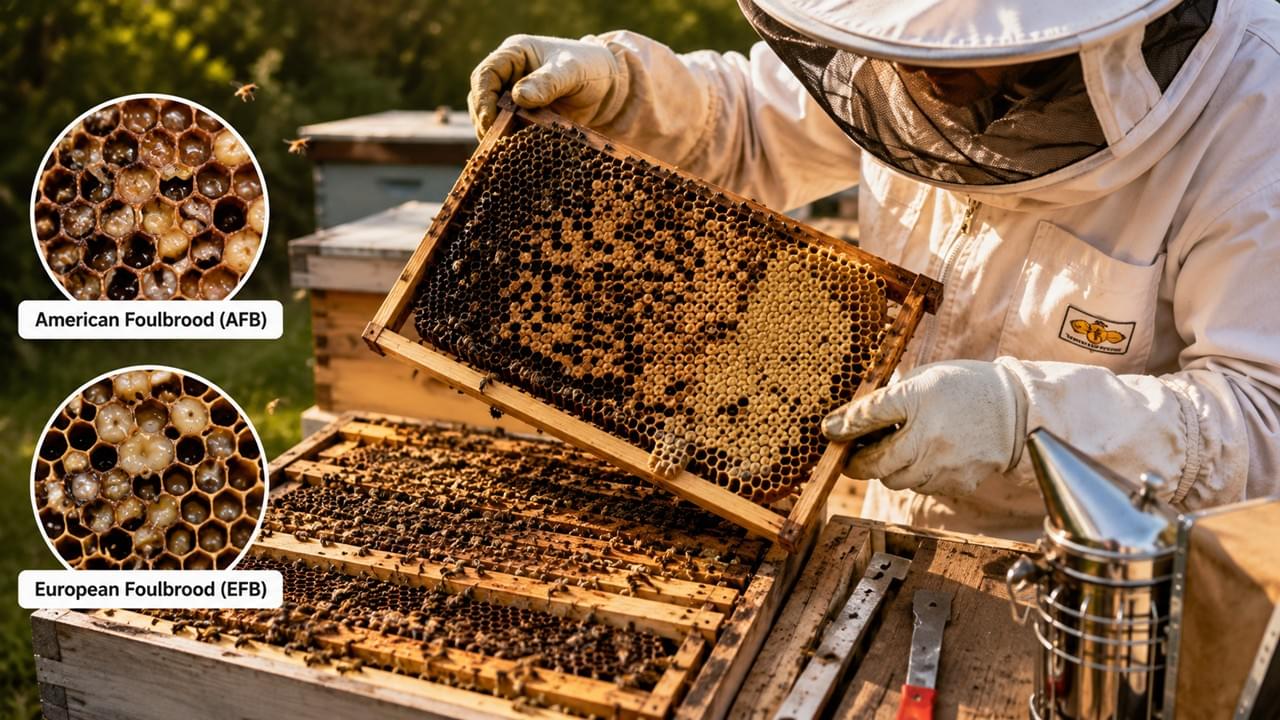
養蜂家によるミツバチの巣箱におけるアメリカ腐蛆病とヨーロッパ腐蛆病の検査

Healthy colonies are the foundation of successful beekeeping, but bacterial brood diseases can quickly destroy hive productivity. Among the most dangerous threats are American Foulbrood and European Foulbrood, two infectious diseases that affect developing bee larvae and spread rapidly through contaminated equipment and weak colony management.

Understanding how to recognize these diseases early can help beekeepers reduce colony losses and maintain stronger hives. In this guide, we’ll explore the symptoms, prevention methods, treatment options, and legal responsibilities related to these serious brood diseases. 🐝

🦠 What Are American Foulbrood and European Foulbrood?

American Foulbrood and European Foulbrood are bacterial infections that attack honey bee brood, but they differ in severity and treatment methods.

🔬 American Foulbrood (AFB)

American Foulbrood is caused by Paenibacillus larvae. The disease mainly infects capped brood and creates highly durable spores that can survive for decades in hive equipment.

Common symptoms include:

  • Sunken or perforated brood cappings
  • Dark brown larval remains
  • 強い悪臭
  • 不均一なひな模様

One classic diagnostic method is the “ropiness test,” where infected larvae stretch into a sticky thread when pulled with a small stick.

Unfortunately, severe AFB infections usually require destruction of infected colonies and contaminated equipment to stop the disease from spreading.

🧪 European Foulbrood (EFB)

European Foulbrood is caused by Melissococcus plutonius. Unlike AFB, EFB usually affects uncapped larvae before cells are sealed.

Signs of EFB include:

  • Twisted or melted larvae
  • Yellowish brood color
  • Sour smell inside the hive
  • Irregular brood development

The good news is that EFB is often treatable when detected early.

🔍 How Diseases Spread in the Apiary

Both diseases can spread rapidly between colonies. Common transmission sources include:

  • Shared hive tools
  • Contaminated frames or honey
  • Robbing behavior between colonies
  • Purchasing unsafe second-hand equipment
  • Drifting bees between nearby hives

Because AFB spores survive for many years, many professional beekeepers avoid using old or poorly sanitized equipment.

Using easy-to-clean hive systems from Delee Beekeeping Equipment Supplier can help reduce contamination risks and improve hive hygiene.

🛡️ Bee Brood Disease Prevention Tips

Preventive management is the best protection against American Foulbrood and European Foulbrood.

🧼 Maintain Clean Equipment

Regularly disinfect hive tools, gloves, feeders, and extraction equipment. Good sanitation reduces bacterial spread significantly.

🍯 Keep Colonies Strong

Healthy colonies are naturally more resistant to brood diseases. Supplemental feeding during nectar shortages can improve colony immunity and brood health.

🔄 Inspect Colonies Frequently

Routine inspections help detect suspicious brood patterns before outbreaks become severe.

🚫 Avoid Unsafe Used Equipment

Old hive boxes and brood comb may contain hidden bacterial spores. Always disinfect second-hand equipment thoroughly before use.

🌿 Improve Colony Nutrition

Access to diverse nectar and pollen sources helps bees maintain stronger immune systems.

Organizations like The Bee Informed Partnership provide valuable educational resources for beekeepers focused on colony health management.

💊 European Foulbrood Treatment for Beekeepers

Compared with AFB, EFB is often manageable with proper intervention.

Common Treatment Methods

Replace Weak Queens

Young queens improve brood quality and colony strength.

Improve Feeding

Providing sugar syrup or pollen supplements supports colony recovery during stressful periods.

Replace Old Comb

Removing heavily contaminated brood comb improves hive cleanliness.

Improve Ventilation

Better airflow reduces moisture and stress inside the hive.

In some regions, approved antibiotic treatments may also be used under veterinary guidance. Always follow local regulations carefully.

Top feeders, hive tools, and brood management equipment from Delee Beekeeping Equipment Supplier can support healthier colony management practices.

⚖️ Legal Requirements Beekeepers Should Know

Many countries and states classify AFB as a reportable disease. Beekeepers may be legally required to notify local agricultural authorities after discovering suspicious symptoms.

Possible legal actions include:

  • Mandatory colony inspections
  • Laboratory testing
  • Hive movement restrictions
  • Destruction of infected colonies

Before transporting bees across regions, always review local apiary regulations through official agencies such as USDA APHIS.

🐝 Why Early Detection Matters

Brood diseases can weaken colonies rapidly, reduce honey production, and threaten nearby apiaries. Early detection gives beekeepers the best chance to contain outbreaks and protect healthy hives.

Strong sanitation, proper nutrition, and regular hive inspections remain the most effective strategies for long-term colony protection.

Whether you manage backyard hives or commercial apiaries, investing in quality hive equipment and responsible disease prevention practices is essential for sustainable beekeeping success. 🐝

For professional beekeeping tools, feeders, hive boxes, and protective equipment, visit Delee Beekeeping Equipment Supplier.

❓よくある質問

What is the difference between AFB and EFB?

AFB affects capped brood and is highly destructive, while EFB usually affects uncapped larvae and is often treatable.

Can American Foulbrood be cured?

Severe AFB infections usually cannot be cured and often require colony destruction.

How can beekeepers prevent brood diseases?

Good sanitation, strong colony nutrition, regular inspections, and clean equipment are the best prevention methods.

Is European Foulbrood dangerous?

Yes. Although treatable, EFB can still weaken colonies and reduce productivity if ignored.

フェイスブック
ワッツアップ
ツイッター
リンクトイン
ピンタレスト
お見逃しなく!
お問い合わせ
こちらのフォームにご記入いただければ、できるだけ早くご返信させていただきます。