
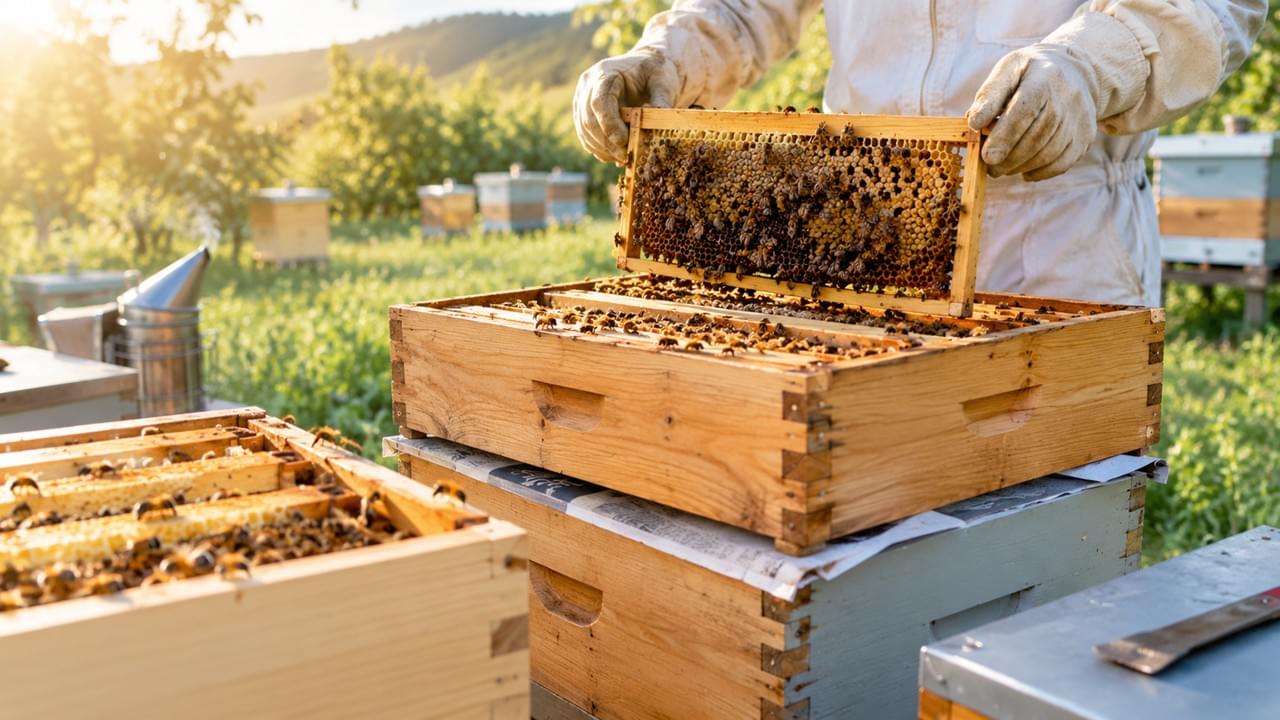
A weak or queenless hive does not always need to be abandoned. Bee colony merging can turn two struggling colonies into one manageable unit, reduce routine work, and help prepare a healthier population for the colder months. But bees do not automatically accept unfamiliar workers. A careless merge can trigger fighting, queen loss, or stress.
The key is simple: assess both colonies first, choose the right method, and give the bees time to recognize one another. This guide explains how to merge weak bee colonies, when to do it, and how to monitor the hive afterward.
Table of Contents
Toggle🐝 Why It Matters
Why Bee Colony Merging Matters
A successful merge combines useful resources while removing an ongoing management problem. If one colony is too small to develop well on its own, combining it with a stronger colony can create a more workable hive.
The source outline highlights three reasons: strengthening a colony, reducing management demands, and preparing for winter. Seasonal guidance from Penn State Extension also notes that weak or light colonies may be strengthened by combining them with another small colony.
📅 Choose the Right Time
When to Consider Bee Colony Merging
A colony with a small adult population may struggle to maintain brood, defend the entrance, and use hive space efficiently. Before merging, inspect the brood pattern, food stores, and general condition. Knowing when to combine bee colonies is more important than simply following a calendar.
If the Colony Has Lost Its Queen
A queenless colony can become increasingly difficult to manage. If requeening is not practical, combining it with a healthy queenright colony may be a more sensible option.
When Preparing for Winter
Fall is an important decision point. Penn State Extension notes that colonies with larger populations and adequate food stores generally have better prospects for winter survival. Combining suitable colonies can therefore be part of a broader winter-preparation plan.
🔍 Prepare Before Combining
Prepare for Bee Colony Merging
Good bee colony merging starts before the boxes are moved. First, confirm that both colonies are suitable candidates. Do not use a healthy colony as a rescue for another colony showing unexplained disease symptoms.
Next, identify the queen situation. If both colonies have queens, determine which queen will remain. Handle the queen carefully. A hive tool, smoker, protective equipment, and suitable frames can make the inspection smoother. Delee offers these essentials through its beekeeping equipment range.
📰 Use the Newspaper Method for Bee Colonies
For many beekeepers, the newspaper method for bee colonies is a practical way to slow down the meeting process. The basic idea is to place a sheet of newspaper between the two colonies so the bees gradually remove the barrier while becoming familiar with the other colony’s scent.
Start with the queenright colony in the lower position, then place the newspaper over the upper box and add the second colony above it. The barrier should allow gradual contact rather than an immediate confrontation.
Check the setup after the bees have had time to work through the paper. Timing depends on weather, colony strength, and bee behavior, so observation matters more than a rigid clock.
🧰 Other Ways to Combine Colonies
Direct Merging
Direct merging puts the colonies together without a gradual paper barrier. It can be quicker, but it also gives unfamiliar bees immediate contact. This approach requires greater confidence and close observation.
Scent Merging
Some beekeepers use a shared scent to make two colonies smell more alike. Delee has published an example involving diluted rice-wine water for Chinese honeybees, but methods can vary by bee type and local practice. Treat such techniques as specialized approaches rather than universal rules.
👀 Monitor the New Colony
Monitor Bee Colony Merging Afterward
Successful bee colony merging does not end when the boxes are stacked. Watch the entrance for unusual fighting, piles of dead bees, excessive agitation, or signs that the colony is struggling.
Check food stores, brood condition, queen presence, and available space. Avoid opening the hive repeatedly just to satisfy curiosity. Bees need time to settle.
If feeding is necessary, choose an appropriate feeder and manage it carefully to avoid creating robbing pressure. Delee’s bee feeder range can support routine feeding needs when natural forage is limited.
⚠️ 5 Common Mistakes to Avoid
- Merging colonies without checking their health.
- Leaving two queens together without a clear plan.
- Using direct merging when a gradual method would be safer.
- Disturbing the hive too frequently afterward.
- Ignoring food stores and space after the merge.
🐝 Final Thoughts on Bee Colony Merging
The best bee colony merging decisions are based on timing, preparation, and observation. A weak colony, a queenless colony, or a colony being prepared for winter may benefit from careful consolidation, but the bees’ health should always come first.
For practical hive equipment, frames, feeders, smokers, and queen-management tools, explore Delee’s beekeeping equipment range and choose equipment that fits your colony-management routine.