
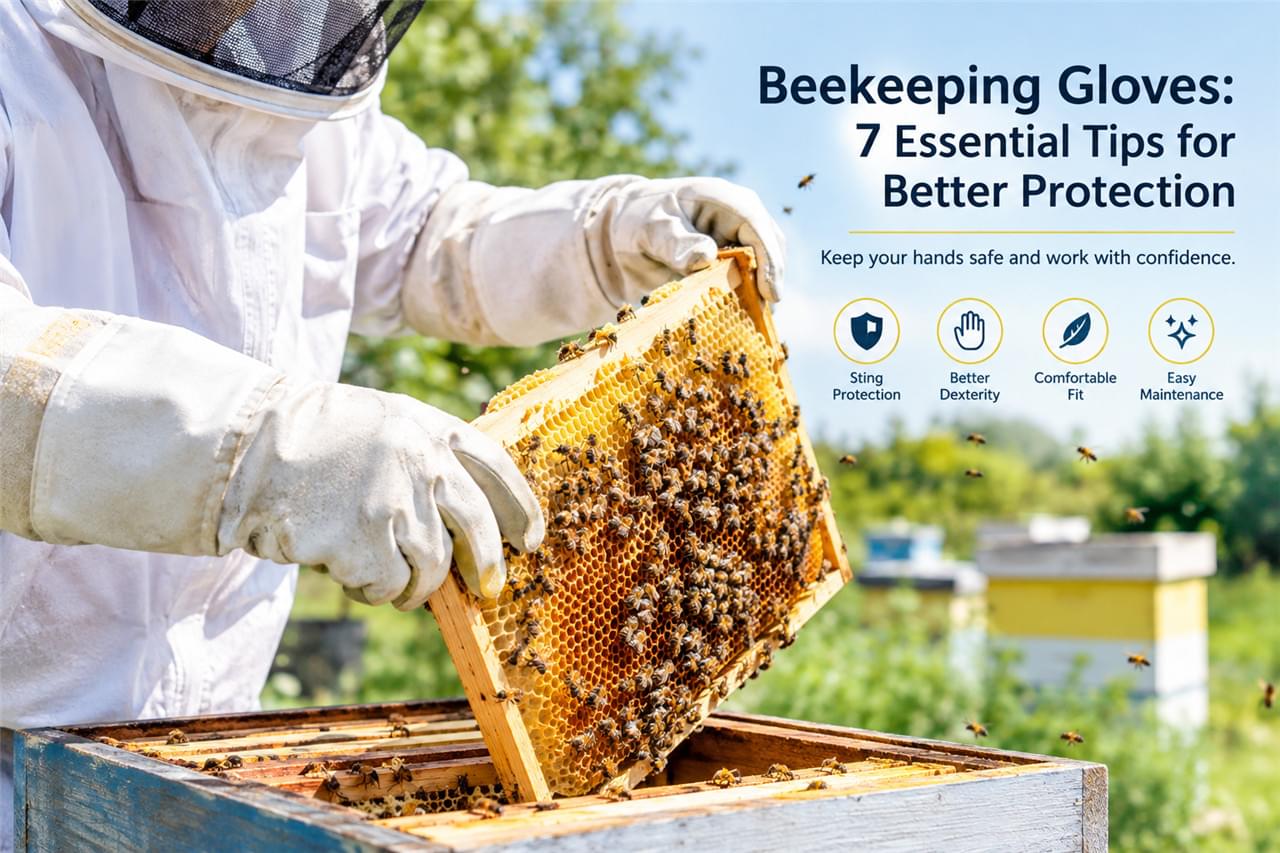
🐝 Beekeeping gloves are essential for protecting your hands while keeping hive inspections comfortable and controlled. Whether you manage a few backyard hives or operate a commercial apiary, the right gloves help you handle frames, use hive tools, and work around bees with greater confidence.
However, choosing gloves involves more than finding a thick material. Fit, flexibility, cleaning requirements, and intended protection all affect daily performance. Goat leather and nitrile are two options worth considering, but each suits different working preferences.
Here are seven practical tips to help you choose the right pair for your needs.
Table of Contents
Toggle1. Why Beekeeping Gloves Matter
Your hands are constantly exposed to potential stings, sticky propolis, and rough hive surfaces. Suitable gloves provide a protective barrier and make routine inspections more comfortable, especially for beginners who are still developing confidence.
Gloves should complement, not replace, a properly fitted bee suit, veil, and other protective equipment. No ordinary glove can guarantee complete protection against bee stings.
2. Compare Goat Leather and Nitrile Gloves
Choosing the right material affects durability, comfort, and hand sensitivity.
Goat Leather Beekeeping Gloves
Goat leather is valued for its relatively soft texture and practical flexibility. Well-made leather gloves can provide a comfortable balance between coverage and control during routine hive inspections.
They are worth considering if you prefer a traditional glove for repeated handling. However, leather needs suitable care because moisture and improper cleaning may cause it to stiffen or deteriorate.
Nitrile Beekeeping Gloves
Nitrile gloves appeal to beekeepers who prefer a close fit and easier routine cleaning. Depending on their thickness and construction, they can provide useful fingertip sensitivity when handling small tools.
⚠️ Not every nitrile glove is designed to resist bee stings. Thin disposable gloves should not be treated as substitutes for purpose-built protective beekeeping gloves. Always confirm the product’s intended use and protective specifications.
3. Choose a Comfortable, Secure Fit
Poor sizing can make even quality gloves frustrating to use. Oversized fingers may bunch around tools, while tight gloves can restrict movement and cause fatigue during longer inspections.
Measure your hand and compare it with the manufacturer’s size chart before ordering. Your fingers should bend naturally, and your thumb should move freely without excessive pressure.
For distributors and retailers, offering multiple sizes helps accommodate different customers and reduces avoidable sizing issues.
4. Balance Protection With Dexterity
A beekeeper needs enough protection without losing control of delicate tasks. Finger flexibility, material thickness, seam placement, and cuff length all influence how gloves perform.
Thicker materials may provide a more substantial barrier but reduce tactile sensitivity. More flexible designs can improve handling, although their protective performance depends on the complete glove construction.
Choose gloves suited to your actual work, whether you are inspecting brood frames, harvesting honey, or managing equipment. Make sure the cuffs work properly with your protective sleeves, leaving no unnecessary gaps.
5. Clean and Inspect Gloves Regularly
🧼 Wax, propolis, and other hive residues can accumulate during normal use. Cleaning protective equipment and maintaining good apiary hygiene help reduce the risk of transferring contaminants between colonies.
Utah State University Extension’s equipment hygiene guide explains why cleaning and appropriate sterilization matter in beekeeping.
After each use, inspect gloves for holes, damaged seams, and worn fingertips. Remove visible residue and follow the manufacturer’s cleaning instructions. Leather and nitrile may require different treatments, so avoid assuming that one cleaning method suits both.
Allow reusable gloves to dry thoroughly before storing them in a clean, dry place. Replace any pair whose damage compromises its intended protection. If a colony disease is suspected, follow local apiary guidance for handling potentially contaminated equipment.
6. Match Gloves to Your Beekeeping Needs
Different users have different priorities.
- Beginners: Prioritize reliable coverage, comfortable sizing, and easy handling.
- Experienced beekeepers: Look for a suitable balance of protection and tactile control.
- Commercial apiaries: Consider durability, cleaning requirements, consistent sizing, and replacement availability.
- Wholesale buyers: Evaluate material quality, construction, size options, packaging, and supply consistency.
Before placing a large order, request product specifications and samples where possible. Confirm the intended protective application rather than judging gloves by appearance alone.
7. Explore Delee Beekeeping Gloves
Delee offers beekeeping equipment for users seeking practical solutions for everyday apiary work. Goat leather and nitrile gloves are two material options to compare when selecting protective equipment.
When evaluating a pair, check its construction, cuff design, available sizes, maintenance requirements, and stated sting-protection capabilities. These details are more useful than choosing based on material name alone.
Explore the Delee Beekeeping Equipment website to learn more about the available range, and contact the team to confirm current glove specifications and bulk purchasing options.
Frequently Asked Questions
Are leather or nitrile gloves better for beekeeping?
Neither is universally better. Leather offers a traditional feel, while suitable nitrile designs may provide a closer fit. Compare comfort, construction, and verified protective performance before deciding.
When should I replace beekeeping gloves?
Replace gloves when you find holes, damaged seams, deteriorated material, or a fit that no longer provides reliable coverage.
Can nitrile gloves prevent bee stings?
Protection varies by design and thickness. Thin disposable nitrile gloves should not be relied on as sting-resistant beekeeping protection.
Protect Your Hands With the Right Choice
The best beekeeping gloves combine a suitable fit, practical dexterity, and protection appropriate for the task. By comparing materials and maintaining your equipment carefully, you can make hive inspections more comfortable and manageable.
🐝 Looking for beekeeping gloves for your apiary or business? Visit Delee Beekeeping Equipment to explore available options and discuss your requirements.