

열정적인 양봉가라면 누구나 꿀이 풍성한 계절의 비결이 바로 작지만 위엄 있는 여왕벌 한 마리에 있다는 것을 알고 있습니다. 정기적인 점검을 위해 벌통을 열 때, 가장 중요한 목표는 바로 이것입니다. 건강한 여왕벌을 식별하세요 그리고 암벌이 최상의 산란 능력을 발휘할 수 있도록 도와야 합니다. 하지만 솔직히 말해서, 5만 마리의 벌 중에서 한 마리를 찾는 것은 마치 건초 더미에서 바늘을 찾는 것처럼 어려울 수 있습니다!
좋은 소식은? 여왕 폐하께서 제 역할을 다하고 계신지 확인하기 위해 항상 여왕 폐하를 뵐 필요는 없다는 것입니다. 여왕 폐하의 "필체"는 빗의 모든 칸에 고스란히 드러나 있습니다. 숙달함으로써 말이죠. 양봉가 벌통 검사 요령, 여왕벌의 건강 상태는 유충을 통해 알 수 있습니다. 이 가이드에서는 왕성하게 활동하는 여왕벌의 시각적 특징과 다양한 특성을 자세히 살펴보겠습니다. 견고한 번식 패턴 모든 양봉가가 꿈꾸는 광경.
1. 최고급 여왕의 위엄 넘치는 외모 ✨
그녀의 작품에 대해 이야기하기 전에, 그녀의 외모에 대해 먼저 이야기해 봅시다. 건강한 여왕벌 겉모습도 그럴듯해 보여야 한다. 암컷은 일개미보다 훨씬 길고, 날개 끝보다 훨씬 길게 뻗은 매끄럽고 길쭉한 복부를 가지고 있다. 이러한 신체적 길이는 암컷의 난소가 잘 발달했음을 직접적으로 보여주는 지표이다.
여왕벌의 움직임을 관찰할 때는 벌집 틀 위를 목적의식을 가지고 걸어가는 여왕벌을 찾아보세요. 움직임이 둔한 여왕벌은 나이가 들었거나 건강이 좋지 않을 수 있습니다. 흥미롭게도, 활력이 넘치는 여왕벌은 보통 일벌 무리에 둘러싸여 있습니다. 일벌들은 여왕벌을 마주 보고 더듬이로 여왕벌을 건드리고 털을 골라주는 원형의 행동을 보입니다. 이러한 행동은 여왕벌이 강력한 여왕 페로몬을 분비하고 있음을 보여주며, 이 페로몬은 벌집을 질서 있고 안정적으로 유지하는 데 도움을 줍니다.
2. 황금 표준: 견고한 번식 패턴 알아보기 🍯
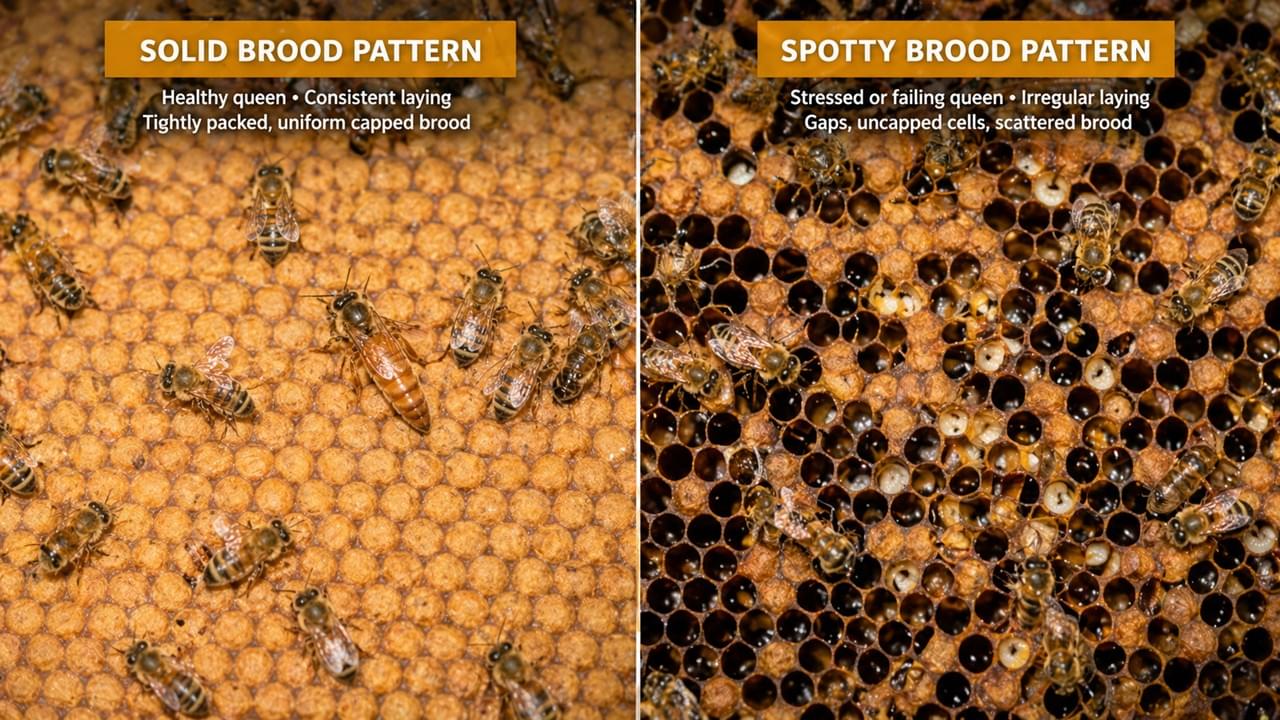
여왕벌이 엔진이라면, 애벌레는 연료입니다. 양봉가에게 가장 만족스러운 광경 중 하나는 봉개된 애벌레로 가득 찬 벌집입니다. 우리가 '벌집'이라고 말할 때, 견고한 번식 패턴, 우리는 일관성을 추구합니다.
A 건강한 여왕벌 여왕벌은 중심에서 시작하여 바깥쪽으로 향하는 촘촘한 동심원 모양으로 알을 낳습니다. 이상적인 상황에서는 봉개된 애벌레가 가득한 넓은 벌집 안에 빈 벌집이 거의 보이지 않아야 합니다. 벌집 틀이 연한 갈색의 스웨이드처럼 보인다면 여왕벌이 최상의 상태일 가능성이 높습니다. 이러한 일관성을 유지하고 싶다면 고품질 벌통을 사용하는 것이 좋습니다. 밀랍 소초판 그녀에게 완벽한 배경을 제공하는 것이 필수적입니다.
3. 유충 건강 상태의 "C"자 모양 읽기 🐛
당신의 동안 양봉가 벌통 검사 요령 관찰할 때는 뚜껑이 덮인 부분만 보지 말고, 뚜껑이 덮인 유충도 살펴보세요. 건강한 유충은 진주처럼 하얗고, 촉촉하게 윤기가 나며, 벌집 바닥에서 뚜렷한 "C"자 모양으로 말려 있어야 합니다.
애벌레가 노랗거나 회색빛을 띠거나, 마치 녹아내린 듯 벌집 바닥에 축 늘어져 있다면 영양 부족이나 질병의 징후일 수 있습니다. 양질의 영양 공급은 애벌레 발달에 필수적입니다. 꿀이 부족한 시기에는 많은 전문가들이 다음과 같은 방법을 사용합니다. 양봉용 사료통 여왕벌이 자원 부족으로 산란을 멈추지 않도록 하기 위해서입니다.
4. 여왕벌의 기능 부전 징후를 식별하는 방법 ⚠️
자연은 언제나 완벽하지 않습니다. 훌륭한 자연 관리자가 되려면 언제 손을 떼야 할지 아는 것도 중요합니다. 실패한 여왕벌을 식별하세요 군집 붕괴 전 나타나는 증상으로는 애벌레가 무작위로 흩어져 있고 빈 공간이 많은 "산탄총" 모양이 첫 번째 위험 신호입니다.
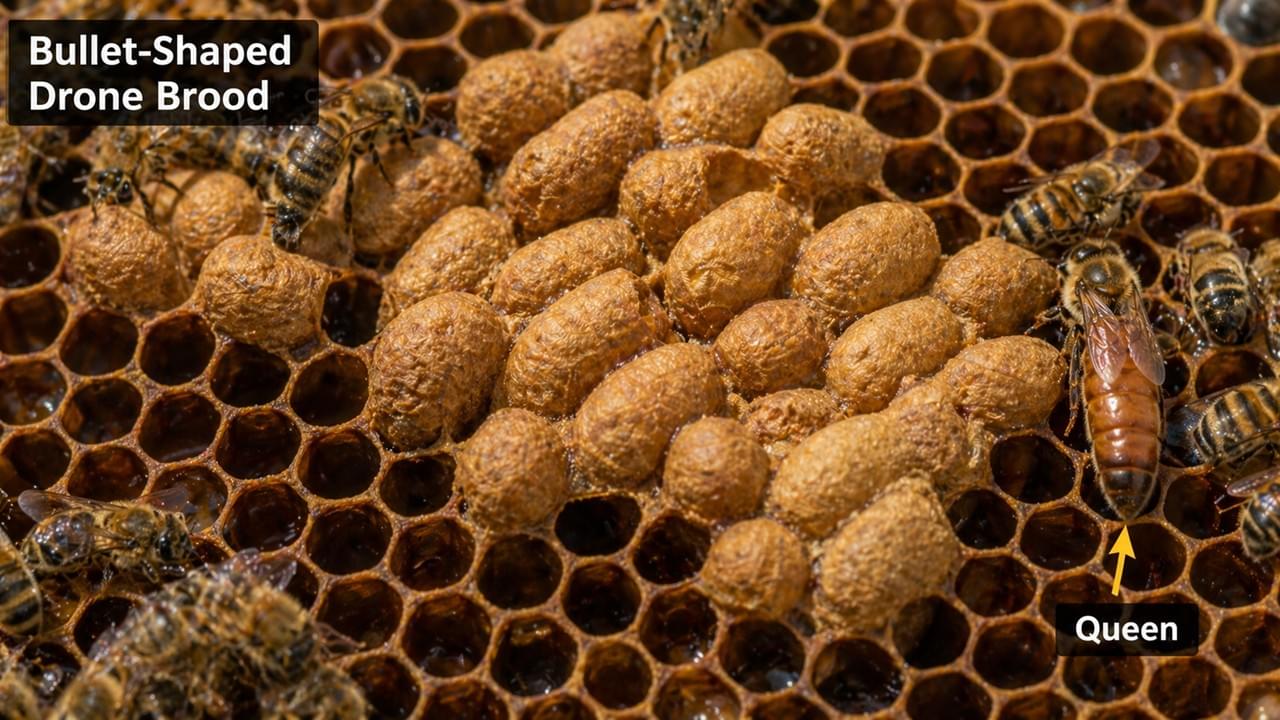
또 다른 위험 신호는 일벌 크기의 작은 벌집에서 "수벌 유충"(돔형 또는 총알 모양의 뚜껑)이 발견되는 것입니다. 이는 정자가 고갈된 "수벌을 낳는 여왕벌"이 있다는 것을 의미합니다. 이런 상황에서는 벌집이 새로운 일벌을 생산할 수 없으므로, 새로운 여왕벌이나 새 알집이 없으면 결국 멸망하게 됩니다.
5. 벌집의 기질과 페로몬 평가 🛡️
A 건강한 여왕벌 여왕벌은 "여왕벌 턱 페로몬(Queen Mandibular Pheromone, QMP)"이라는 강력한 화학 물질을 분비합니다. 이 향기는 일벌들에게 모든 것이 통제되고 있음을 알려줍니다. 여왕벌이 쇠약해지거나 사라지면 벌집의 분위기가 순식간에 바뀝니다.
여왕벌이 없는 벌통은 종종 더 높은 음의 소리를 내는데, 이를 "여왕벌 없는 울음소리"라고 합니다. 벌들은 또한 벌집 틀 위에서 더 공격적이거나 "떨리는" 모습을 보이며, 검사 중에 차분하게 있지 않고 불안하게 움직일 수 있습니다. 믿을 수 있는 도구를 사용하면 안정적인 환경을 유지하기가 더 쉽습니다. 벌 훈연기 여왕벌의 활동 상태를 평가하는 동안 경고 페로몬을 감추기 위해서입니다.
6. 외부 스트레스 요인이 유충에 미치는 영향 🌪️
때때로 부실한 산란 양상은 여왕벌의 잘못이 아닐 수 있습니다. 진드기 감염이나 살충제 노출과 같은 외부 요인이 여왕벌의 기능 부전 증상과 유사한 결과를 초래할 수 있습니다. 꿀벌 건강 연합, 진드기 수치를 모니터링하는 것은 유충을 보호하는 데 매우 중요합니다.
일벌들이 적극적으로 번데기를 꺼내는 행동(위생적 밀랍 제거)을 보인다면, 유럽 부저병과 같은 질병을 관리하려는 것일 수 있습니다. 유충 관찰 결과를 확인할 때는 벌의 등이나 벌통 바닥에 진드기가 있는지 확인하는 것도 중요합니다.
7. 건강한 여왕벌을 위한 적극적인 관리 👑
양봉장을 번성하게 유지하려면 적극적인 관리가 필수적입니다. 상업 양봉업자들은 꿀 생산량을 극대화하기 위해 1~2년마다 여왕벌을 교체하는 것이 일반적입니다. 건강한 여왕벌을 식별하세요 여왕벌이 더 이상 벌집의 필요를 충족시키지 못한다면 주저하지 말고 여왕벌을 교체하세요.
다음과 같은 도구를 사용하여 여왕벌 케이지 도입 과정에서 새로운 왕벌의 수용률을 크게 높일 수 있습니다. 성공적인 양봉가는 단순히 벌을 "키우는" 것이 아니라 벌집의 생물학적 잠재력을 관리한다는 것을 기억하세요.
결론: 양봉 전문가로 가는 길 🌟
식별 기술을 숙달하세요 건강한 여왕벌 그리고 인식하다 견고한 번식 패턴 시간과 인내가 필요합니다. 애벌레의 밀집도, 유충의 색깔, 그리고 벌통 전체의 분위기를 관찰함으로써, 당신은 벌들의 성공을 위한 동반자가 될 수 있습니다.
양봉 실력을 한 단계 업그레이드할 준비가 되셨나요? 델리 양봉 장비, 저희는 여왕벌과 벌집을 지원하는 데 필요한 모든 전문 도구를 한 곳에서 제공하는 데 특화되어 있습니다. 정밀한 여왕벌 사육 키트부터 내구성이 뛰어난 벌통 구성품까지, 저희는 여러분이 번성하는 양봉장을 위한 최적의 환경을 조성할 수 있도록 도와드립니다. 저희 제품을 살펴보세요. 전체 카탈로그 오늘 함께 꿀 수확량을 늘려봅시다!