
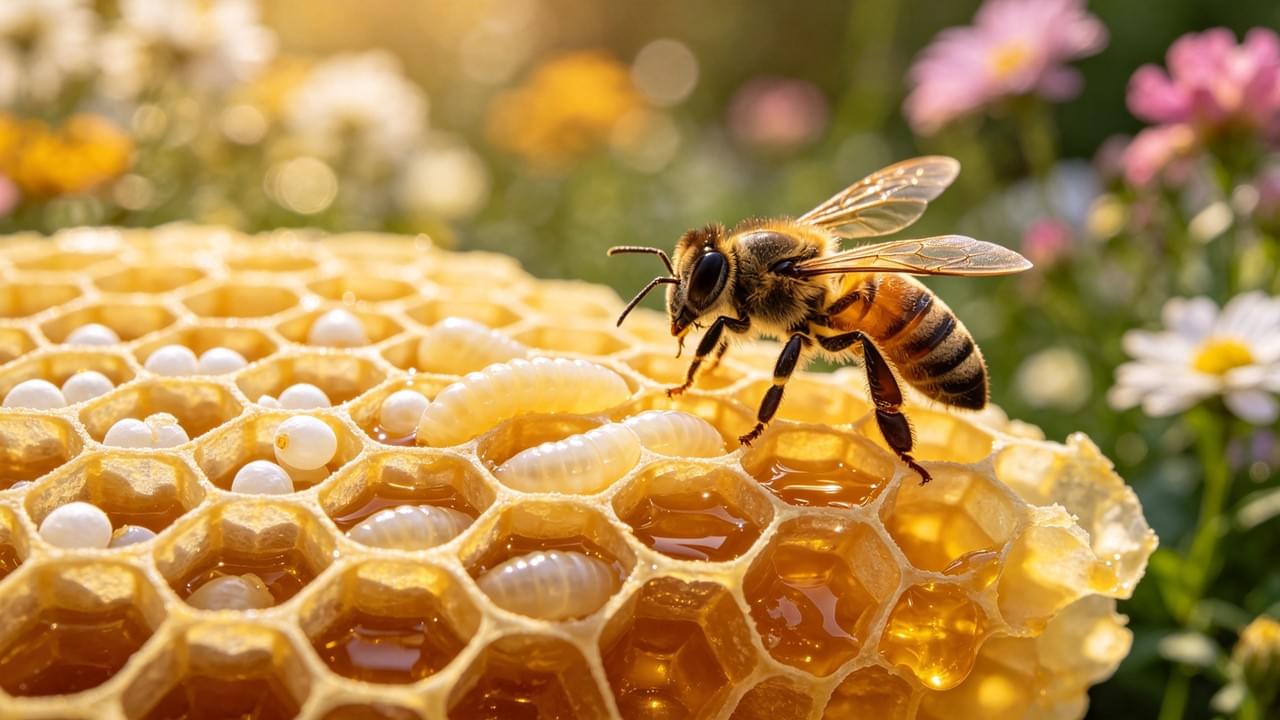
모든 노련한 양봉가들은 번성하는 양봉장이 운에 달려 있는 것이 아니라 생물학에 대한 깊은 이해에 기반한다는 것을 알고 있습니다. 꿀벌의 생애 주기 벌통의 심장 박동과 같은 리듬을 해독하는 것은 꿀 생산부터 겨울철 생존까지 모든 것을 좌우하는 정교한 과정입니다. 취미로 양봉을 즐기는 사람이든 상업적인 규모로 운영하는 사람이든, 이 리듬을 해독하는 것은 매우 중요합니다. 꿀벌의 발달 단계 이는 숙달을 향한 첫걸음입니다.
~에 델리 양봉 장비, 우리는 양봉의 핵심은 발달 단계별로 적절한 환경을 제공하는 것이라고 믿습니다. 벌집의 미세한 세계로 들어가 이 놀라운 곤충들이 작은 알에서 강력한 일꾼으로 변모하는 과정을 함께 살펴보겠습니다.
목차
비녀장건축가: 여왕과 생명의 불꽃 👑
모든 것은 여왕벌로부터 시작됩니다. 유일하게 성적으로 성숙한 암컷인 여왕벌의 활력은 벌집의 미래를 결정짓습니다. 여왕벌은 하루에 최대 2,000개의 알을 낳을 수 있으며, 각각의 알은 육각형 밀랍 벌집 바닥에 정성스럽게 놓입니다. 벌집의 유전적 개량을 원한다면, 이 기본 사항을 이해하는 것이 매우 중요합니다. 여왕벌을 더욱 효과적으로 관리하고 싶다면, 전문적인 방법을 알아보는 것이 좋습니다. 여왕벌 사육 도구 일상적인 업무에 엄청난 변화를 가져올 수 있습니다.
1단계: 달걀 – 3일간의 고요 🥚
그 안에서 꿀벌의 생애 주기, 알 단계는 겉보기에는 조용하지만, 실제로는 매우 조용합니다. 3일 동안 아주 작고 꼿꼿하게 선 "쌀알" 같은 알이 벌집 안에 있습니다. 이 단계에서 알은 매우 연약하기 때문에 벌통 내부 온도를 약 35°C(95°F)로 안정적으로 유지해야 합니다. 따라서 고품질의 단열 벌통을 선택하는 것이 중요합니다. 벌집 이는 차세대를 외부 온도 변화로부터 보호하는 데 필수적입니다.
2단계: 유충 - 먹이 사냥 🐛
알이 부화하는 4일째 되는 날, 유충이 나오는데, 이 유충은 C자 모양의 하얀색 생물로 왕성한 식욕을 지니고 있습니다. 이 기간 동안 꿀벌의 발달 단계, 일벌들은 애벌레에게 수천 번씩 먹이를 줍니다. 처음에는 로열젤리를 주고, 그 다음에는 꿀과 꽃가루를 섞은 '벌빵'을 줍니다.“
양봉가로서 이것은 여러분이 정보를 얻을 수 있는 가장 중요한 창구입니다. 건강한 산란 패턴을 식별하는 방법. 건강한 유충은 진주처럼 하얗고 윤기가 나야 합니다. 만약 유충이 칙칙하거나 노랗거나 "녹아내린" 것처럼 보인다면, 건강 안내서를 참고하거나 지역 농업기술센터에 문의해야 합니다.
3단계: 번데기 – 위대한 변태
(일꾼들의 경우) 9일쯤 지나면 밀폐된 공간에 통기성 있는 밀랍 뚜껑을 씌웁니다. 바로 이 순간부터 마법이 시작됩니다. 꿀벌의 생애 주기 정말 일어나는 일입니다. 고치 안에서 유충은 다리, 날개, 그리고 복잡한 겹눈을 발달시킵니다.
4단계: 성인 – 목적 의식을 가지고 새롭게 태어나다 🐝
출현 시기는 생체 시계에 따라 결정됩니다.
- 퀸즈: 16일
- 근로자: 21일
- 드론: 24일
일벌은 밀랍 뚜껑을 뚫고 나오면 바로 쉬지 않습니다. 즉시 "집벌"로서의 임무를 시작하는데, 다음 알을 낳을 벌집을 준비하기 위해 자신의 벌집을 청소하는 것입니다.
모니터링을 하는 이유는 무엇일까요? 꿀벌의 생애 주기 수확량 증대 📈
이러한 시간표를 이해하면 "개체수 폭발"을 예측할 수 있습니다. 만약 엄청난 양의 봉개된 유충을 발견했다면, 12일 안에 꿀을 채집하는 벌의 수가 두 배로 늘어날 것이라는 것을 알 수 있습니다. 이때가 바로 새로운 꿀통을 추가하여 분봉을 방지하고 꿀 채집량을 극대화하기에 가장 적절한 시기입니다. 올바른 방법을 사용하면 꿀 추출기 늦은 계절에 수확하면 꿀벌들의 노고를 최소한의 낭비로 거둘 수 있습니다.
보호하는 것 꿀벌의 생애 주기 해충으로부터 🛡️
번데기 단계에서 가장 큰 위협은 바로아 진드기입니다. 이 기생충은 벌집이 봉해지기 직전에 벌집 안으로 들어가 발달 중인 꿀벌을 먹이로 삼습니다. 21일 주기를 알면 진드기가 가장 취약한 시기에 유기농 방제 작업을 효과적으로 할 수 있습니다.
이제 막 시작하는 사람들에게는 고품질 제품에 투자하는 것이 좋습니다. 초보자를 위한 양봉 장비, 와 같은 보호복 그리고 훈연기를 사용하면 벌에 쏘일 걱정 없이 이러한 중요한 검사를 수행할 수 있으므로, 벌 유충을 세심하고 차분하게 관찰할 수 있습니다.
결론: 여러분의 식민지를 위한 원스톱 솔루션
그만큼 꿀벌의 생애 주기 닭은 자연의 기적이지만, 번성하기 위해서는 올바른 관리가 필요합니다. 알을 낳을 수 있는 기반을 마련하는 것부터 최종 수확을 위한 도구를 제공하는 것까지, 델리 양봉 장비 저희는 고객 여러분의 성공을 위해 최선을 다합니다. 저희의 "원스톱 서비스"는 훈연기 한 대부터 벌통 여러 개까지, 필요한 모든 장비와 기술 지원을 제공하여 벌들의 건강과 생산성을 유지하는 데 도움을 드립니다.
양봉 실력을 한 단계 끌어올릴 준비가 되셨나요? 지금 바로 연락주세요 군집 생활의 모든 단계를 지원하도록 설계된 전문가급 장비에 대한 견적을 받아보세요.