
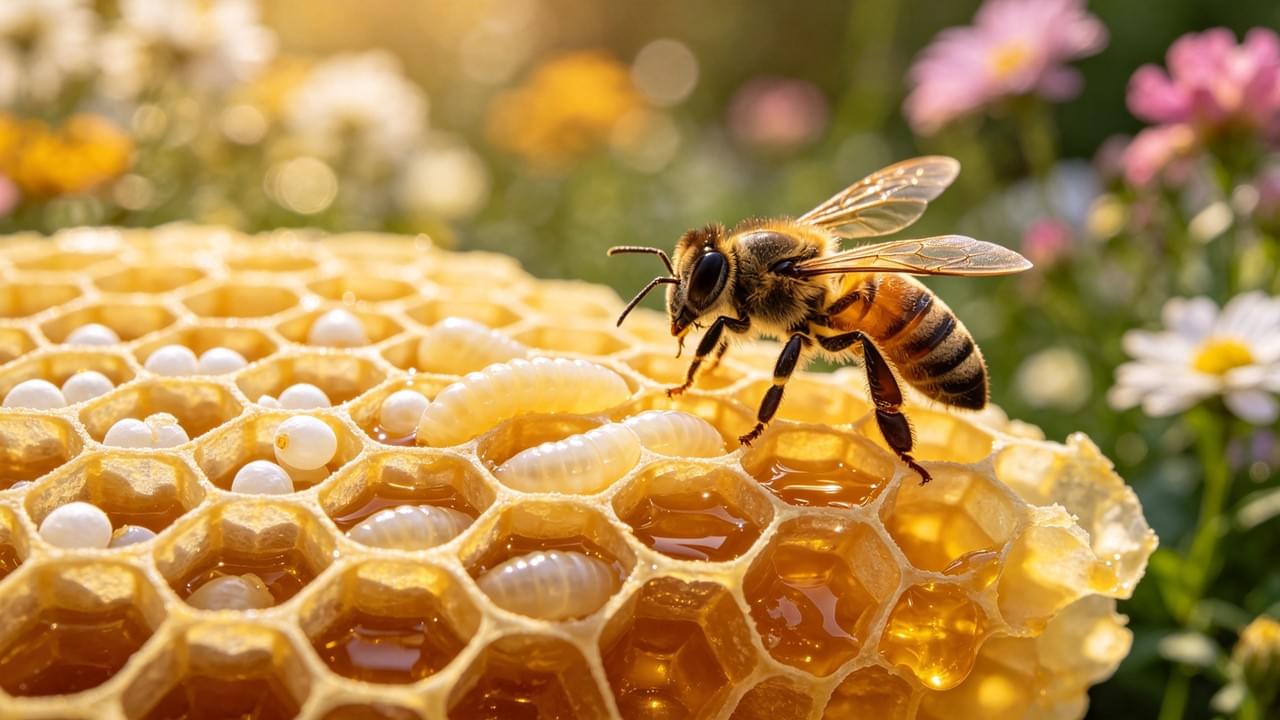
Every master beekeeper knows that a thriving apiary isn’t built on luck; it’s built on a profound understanding of biology. The Honey Bee Life Cycle is the rhythmic heartbeat of your hive, a sophisticated process that dictates everything from honey production to winter survival. Whether you are a curious hobbyist or scaling a commercial operation, decoding the honey bee developmental stages is your first step toward mastery.
At Delee Beekeeping Equipment, we believe that providing the right environment for each stage of development is the hallmark of professional apiculture. Let’s dive into the microscopic world of the comb and discover how these incredible insects transform from tiny eggs into a powerhouse workforce.
Table of Contents
ToggleThe Architect: The Queen and the Spark of Life 👑
It all begins with the Queen. As the only sexually mature female, her vitality defines the colony’s future. She can lay up to 2,000 eggs a day, each one placed meticulously at the bottom of a hexagonal wax cell. If you’re looking to improve your hive’s genetics, understanding this starting point is crucial. For those looking to manage their queens more effectively, exploring professional Queen Rearing Tools can make a world of difference in your daily operations.
Stage 1: The Egg – Three Days of Stillness 🥚
In the Honey Bee Life Cycle, the egg stage is deceptively quiet. For three days, a tiny, upright “speck of rice” sits in the cell. At this stage, the eggs are fragile and require a stable internal hive temperature of roughly 35°C (95°F). This is why choosing high-quality, insulated Bee Hives is essential for protecting the next generation from external temperature swings.
Stage 2: The Larva – A Feeding Frenzy 🐛
Once the egg hatches on day four, the larva emerges—a C-shaped, white creature with a voracious appetite. During these honey bee developmental stages, “nurse bees” feed the larvae thousands of times. They are first given royal jelly, then a mixture of honey and pollen known as “bee bread.”
As a beekeeper, this is your primary window to how to identify healthy brood patterns. A healthy larva should be pearly white and glistening. If they look dull, yellow, or “melted,” it’s time to consult a health guide or contact your local agricultural extension.
Stage 3: The Pupa – The Great Transformation
Around day nine (for workers), the cell is sealed with a breathable wax cap. This is where the magic of the Honey Bee Life Cycle truly happens. Inside the cocoon, the larva develops legs, wings, and complex compound eyes.
Stage 4: The Adult – Emerging with Purpose 🐝
The timing of emergence is a biological clock:
- Queens: 16 Days
- Workers: 21 Days
- Drones: 24 Days
When a worker bee bites through her wax cap, she doesn’t rest. She immediately begins her “house bee” duties—cleaning her own cell to prepare it for the next egg.
Why Monitoring the Honey Bee Life Cycle Boosts Yields 📈
Understanding these timelines allows you to anticipate “population explosions.” If you see a massive amount of capped brood, you know that in 12 days, your foraging force will double. This is the perfect time to add a new honey super to prevent swarming and maximize nectar collection. Using the right Honey Extractors later in the season ensures that the hard work of these bees is harvested with minimal waste.
Protecting the Honey Bee Life Cycle from Pests 🛡️
The biggest threat during the pupal stage is the Varroa Mite. These parasites enter the cell just before it’s capped, feeding on the developing bee. By knowing the 21-day cycle, you can time your organic treatments effectively to hit the mites when they are most vulnerable.
For those just starting, investing in high-quality beekeeping equipment for beginners, such as Protective Clothing and smokers, allows you to perform these vital inspections without the stress of being stung, ensuring you can observe the brood carefully and calmly.
Final Thoughts: The One-Stop Solution for Your Colony
The Honey Bee Life Cycle is a miracle of nature, but it requires the right stewardship to flourish. From providing the foundation for egg-laying to the tools for the final harvest, Delee Beekeeping Equipment is committed to your success. Our “One-Stop Service” ensures that whether you need a single smoker or a container of hives, you receive the technical support and quality gear required to keep your bees healthy and productive.
Ready to elevate your beekeeping? Contact us today for a quote on professional-grade equipment designed to support every stage of your colony’s life.