
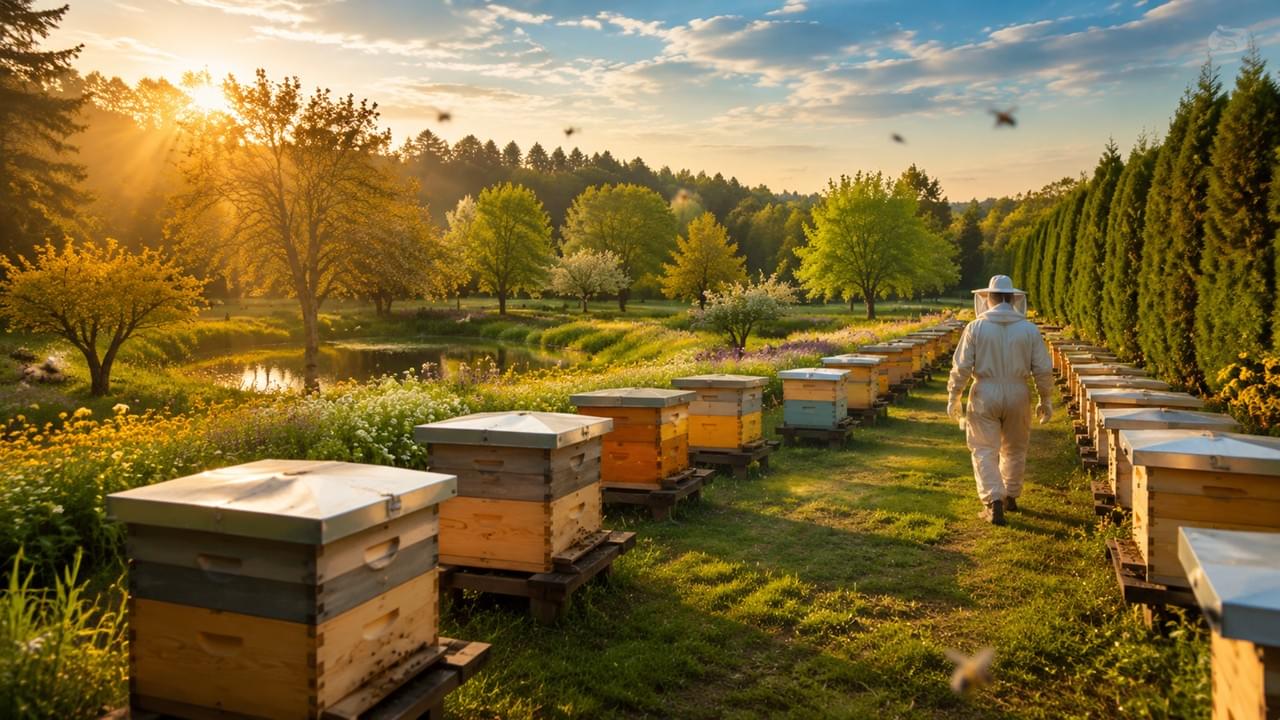
Choosing the right apiary location is one of the most critical decisions you will make as a beekeeper. The spot you select determines everything—from colony health and survival rates to the quantity and quality of honey you harvest each season. While honey bees are remarkably adaptable creatures, thoughtful site selection can mean the difference between a thriving, productive operation and one that struggles year after year.
Whether you are a beginner setting up your first hives or an experienced beekeeper looking to optimize your operation, understanding the key factors in apiary site selection is essential. This guide will walk you through seven proven secrets to finding the perfect location for your bee yard.
Table of Contents
ToggleSecret #1: Understand Your Bees’ Foraging Range
Before evaluating any potential site, it is crucial to understand how far your bees will travel for food. Honey bees prefer to forage within a 2-mile radius of their hives, though they can travel up to 5 miles if necessary. Research decoding waggle dances has shown that flight distances are often closer to 0.6 miles when abundant forage is available nearby.
🐝 Key takeaway: The closer the forage, the more efficient your bees will be. Bees that travel long distances expend more energy and bring back fewer resources per trip.
A practical approach is to use mapping tools like Google Earth. Draw a 2-mile diameter circle around your proposed location, then add another 4-mile diameter circle. This gives you a “bees’ eye view” of almost all the area your colonies will inhabit. What kind of vegetation do you see? Forests, cultivated crops, suburban yards, abandoned fields, or orchards?
Secret #2: Secure Abundant and Diverse Food Sources
The single most important factor in apiary site selection is the availability and quality of forage. Your bees need a diverse and continuous supply of nectar and pollen throughout the entire foraging season.
Ideal forage areas feature a mix of mature deciduous trees and open areas with yards, weedy fields, and unkempt hedgerows. This variety ensures that something is blooming from early spring through late fall.
Less ideal forage areas include:
- 🌲 Single-species plantations (like pine forests) that lack plant diversity
- 🌽 Monoculture crop fields (corn, soybeans) that offer limited forage
- 🚜 Areas dominated by agricultural practices that may pose pesticide risks
💡 Urban beekeeping tip: Don’t discount urban areas! City bees, with much less competition, can do very well and often overwinter better than in rural settings.
Beekeepers striving toward organic colony management should pay special attention to the landscape within a 1-mile radius surrounding their apiaries. A free web-based tool called Beescape combines GIS data and USDA Cropland Data to predict habitat types and floral resources in your chosen area.
Secret #3: Provide a Reliable Water Source
Water is essential for bees—they need it for cooling the hive, diluting honey, feeding larvae, and maintaining proper humidity levels. A reliable water source within 1/4 mile of the hives is ideal.
💧 Pro tip: If natural water isn’t available, provide a tank or pan with stones, twigs, or crushed rock for bees to land on safely.
Providing water near your hives serves another critical purpose: it prevents your bees from becoming a nuisance to neighbors. Bees naturally seek water at the nearest source—which could be a neighbor’s swimming pool, pet water bowl, or birdbath. By offering a consistent, attractive water source on your own property, you keep your bees close to home and maintain good neighborly relations.
Secret #4: Optimize Sunlight Exposure
Sun exposure directly influences colony activity and honey production. Morning sun is especially important. Positioning hives to face southeast helps the colony warm up early, encouraging bees to begin foraging sooner in the day.
☀️ Golden rule: Face hives somewhere between south and east for maximum morning sun exposure.
However, bees also need protection from excessive heat. Direct sunlight all day can cause hives to overheat in the afternoon, leading to lethargic bees that struggle to forage and produce honey. Partial afternoon shade keeps hives cool during warm summer months.
Avoid placing hives in deep, dark shade—shade from trees retards the flight of workers and hinders finding the queen and seeing eggs within the cells.
Secret #5: Protect Against Wind
Strong winds can devastate bee colonies. Wind makes it harder for bees to fly and forage, and increases the energy costs of maintaining hive temperature during cold weather.
🌬️ Ideal protection: The apiary is best situated near natural wind protection such as hills, buildings, or evergreens.
If natural windbreaks aren’t available, you can create your own using fences, shrubs, or even hay bales.
Avoid windy, exposed hilltops or sites near riverbanks that might flood. Also avoid damp bottom land since excess moisture encourages diseases like nosema and European foulbrood.
Secret #6: Ensure Easy Accessibility
This may be the most important factor in apiary location. You must visit your hives throughout the year in all kinds of weather for inspections, feeding, mite treatments, and honey harvesting.
🚗 The golden rule of accessibility: If you can’t get to the yard, no other characteristic matters.
Consider these questions:
- Can you drive or walk to the site easily, even after rain?
- Will you be able to carry heavy equipment and supers of honey without excessive effort?
- Is the site far from your home? Beekeepers tend to neglect out-apiaries located too far from home
Level ground is equally important. Hives need level ground so bees can build and work properly. A level hive provides better stability during storms and makes your inspections much easier.
Secret #7: Avoid Pesticides and Manage Neighbor Relations
Pesticide exposure is a significant threat to honey bee health. More than 43% of commercial beekeepers report significant colony declines due to factors including pesticide exposure.
⚠️ Critical safety measures:
- Place colonies away from fields routinely treated with pesticides
- Acquaint yourself with pesticides commonly used in the area
- Avoid locations near golf courses or ornamental plantings that rely on frequent insecticide use
- Consider the risk of pesticide drift from neighboring properties
Good neighbor relations are equally vital. In urban and suburban settings, legal problems most often occur with neighbors. Take these precautions:
- Maintain 15-20 feet clearance in front of hives to minimize defensive behaviors
- Face hive entrances away from neighbors’ homes
- Provide water to prevent bees from visiting neighbors’ pools
- Consider screening hives from view with fencing or hedges
- Talk with your immediate neighbors before setting up your apiary
Your Apiary Site Selection Checklist
Before committing to a location, run through this assessment:
| Factor | Ideal Condition |
|---|---|
| 🌸 Forage | Diverse, season-long nectar/pollen within 2 miles |
| 💧 Water | Clean water source within 1/4 mile |
| ☀️ Sunlight | Morning sun (southeast facing) + afternoon shade |
| 🌬️ Wind | Natural or artificial wind protection |
| 🚗 Access | Easy year-round access for you |
| 🧪 Pesticides | Away from routinely treated areas |
| 🏡 Neighbors | Positioned to minimize conflicts |
| 🏔️ Drainage | Level, well-drained ground |
Why Apiary Location Matters for Your Bottom Line
The location of your bee yard directly impacts your honey yields and profitability. A well-sited apiary means:
- 📈 Higher honey production from efficient foraging
- 🏥 Healthier colonies with stronger immune systems
- 💰 Lower supplemental feeding costs
- 📉 Reduced colony losses and fewer replacements
- 😊 More enjoyable beekeeping with easier access and management
Ready to Optimize Your Apiary?
At DeLee Beekeeping Equipment Supplier, we understand that successful beekeeping starts with the right foundation. That is why we offer a complete range of high-quality beehives and accessories designed to support healthy, productive colonies in any location.
Whether you are setting up your first apiary or expanding an existing operation, our durable beehive stands, protective gear, and seasonal management tools will help you get the most from your chosen site.
Explore Our Beehives & Accessories Today
DeLee Beekeeping Equipment Supplier – Your trusted partner in global beekeeping, providing comprehensive solutions from hive setup to honey harvest.