
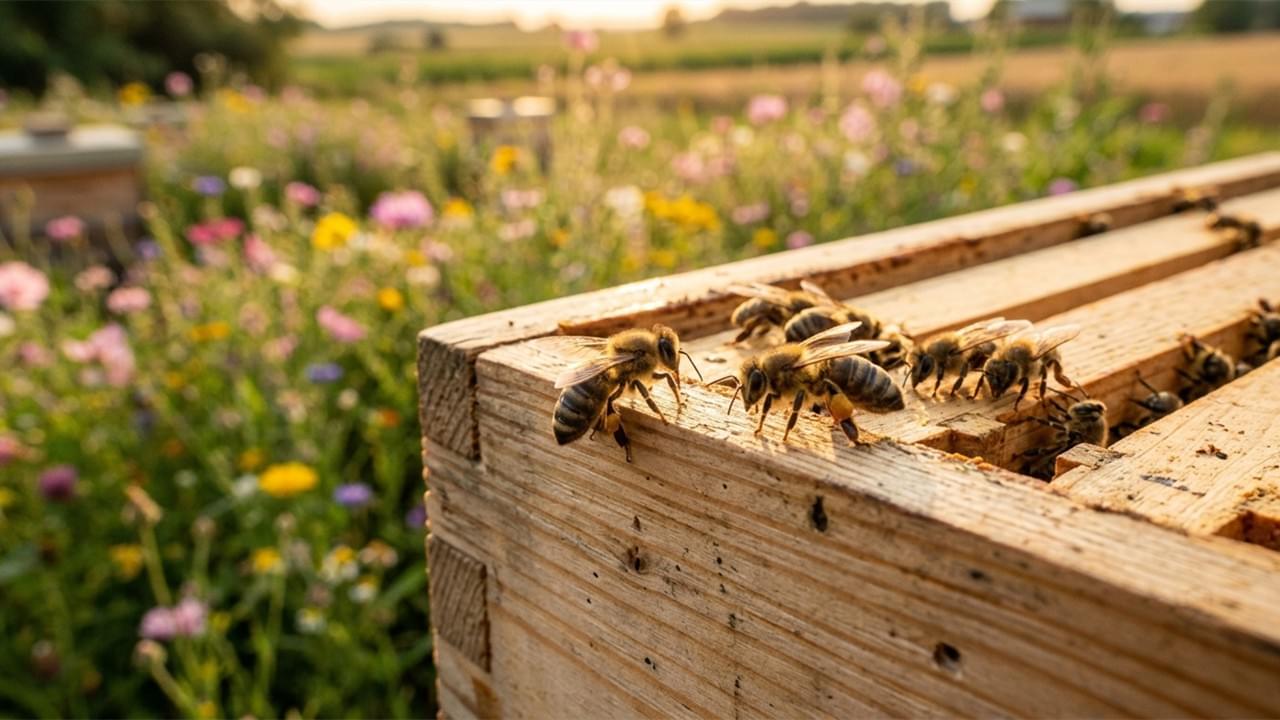
Every spring, commercial and backyard beekeepers face a silent crisis across agricultural landscapes. Recent national surveys reveal that managed honeybee colonies suffer annual loss rates exceeding 50%, with chemical spray drift and toxic agricultural runoff driving much of this destruction. If you want to protect honeybees from pesticides, relying on luck when neighboring fields get treated is no longer a viable strategy. Chemical toxicity attacks worker foraging capacity, weakens queen laying potential, and destroys vulnerable brood health. Fortunately, proactive yard management gives your apiary a fighting chance. By pairing smart yard tactics with heavy-duty protective gear, you can shield your colonies from severe chemical exposure and build a resilient apiary year-round.
Table of Contents
Toggle⚠️ The Hidden Threat of Sub-Lethal Toxins
While acute chemical poisoning leaves obvious piles of dead workers outside the hive entrance, sub-lethal toxicity is far more dangerous over time. Systemic insecticides contaminate floral nectar and pollen at microscopic levels. Over time, these chemicals disrupt honeybee navigational memory, making field foragers forget their way back to the hive. Furthermore, sub-lethal stress suppresses honeybee immune pathways, leaving colonies vulnerable to parasitic Varroa mites and secondary viral outbreaks. To mitigate neonicotinoid risk in hives, apiarists must focus on reducing chemical stress both outside and inside the brood nest. Understanding these hidden environmental hazards allows you to take action before symptoms turn critical.
🌾 1. Build Farmer Alliances to Protect Honeybees from Pesticides
Communication is your strongest defensive weapon when farming season begins. Most spray damage occurs simply because chemical applicators do not know beehives are located nearby. Reach out to local farmers, orchard managers, and spray pilots well before bloom season starts. Request a 24- to 48-hour advance notification before any pesticide or fungicide application within a two-mile radius. You can also map your yard locations on public mapping databases like the DriftWatch Registry. Encouraging growers to apply treatments during cool evening hours—when honeybee flight activity halts—significantly lowers direct contact hazards and keeps your field foragers safe.
🛡️ 2. Lock Down Entrances to Protect Honeybees from Pesticides
When a neighbor plans an active spray campaign, temporary hive confinement keeps field foragers safely indoors during peak chemical application hours. Close hive entrances early in the morning using breathable wire mesh or damp burlap before flight starts. Confinement builds intense internal heat inside the brood box, so proper airflow becomes critical. Upgrade your hives with screened hive ventilation equipment and top screens to prevent heat exhaustion during warm afternoons. Keep hives enclosed during active spraying, ensuring your colony stays sheltered until chemical drifts settle and dry completely on nearby field foliage.
💧 3. Provide Clean Water to Protect Honeybees from Pesticides
Foraging workers often collect contaminated water from irrigation ditches, wet leaves, or farm puddles during dry summer spells. Providing a clean, dedicated water source directly inside your apiary prevents workers from drinking toxic agricultural runoff. During local spray windows or summer nectar dearths, rely on in-hive bee feeder supplemental feeding using clean 1:1 sugar syrup and fresh water. Equipping hives with high-capacity in-hive bee feeders satisfies colony thirst internally, keeping foragers safely inside the hive yard while nearby field sprays take place.
🔧 4. Apply Smart IPM Tactics to Protect Honeybees from Pesticides
A colony already struggling with internal miticide residues or diseases succumbs to pesticide exposure much faster. Embracing integrated pest management for beekeepers keeps baseline hive stress low throughout the season. Rotate out 20% to 30% of old brood comb annually, as beeswax absorbs synthetic chemicals and pesticide residues over time. Combine comb renewal with screened bottom boards and non-chemical Varroa control techniques. For guidance on regional chemical safety standards, consult the EPA Pollinator Protection Guide to stay fully aligned with industry best management practices.
🚨 Rapid Emergency Response Protocol
When acute chemical poisoning strikes despite your best efforts, fast action saves remaining lives. If you notice sudden mass die-offs, trembling worker bees, or extended proboscises at hive entrances, execute a rapid emergency response protocol:
- 📸 Document Everything: Take timestamped photos and video footage of affected bottom boards and field conditions.
- 🧪 Collect Samples: Put on protective nitrile gloves and gather 100 to 200 dead bees in a clean glass jar, then freeze them immediately for laboratory testing.
- 📞 Notify Authorities: File an official incident report with your state apiary inspector within 24 to 48 hours to initiate a formal investigation.
🐝 Partner with Delee Beekeeping for Hive Resilience
Building pesticide-resilient apiaries requires reliable, professional-grade equipment. At Delee Beekeeping Equipment Supplier, we manufacture heavy-duty wooden hives, high-ventilation screened bottom boards, precision in-hive feeders, and 3D mesh sting-proof bee suits designed for maximum colony protection. Whether you manage ten hives or ten thousand, our factory-direct pricing, low minimum order quantities, and fast worldwide shipping ensure your apiary stays equipped against environmental hazards. Explore our full catalog today to fortify your hives for the upcoming season and secure your apiary’s long-term survival!